


Customer relationships are built on consistent communication. Every interaction, whether it’s welcoming a new subscriber, reminding someone about an appointment, or following up after a purchase, shapes how people see your brand. Each of those touchpoints is an opportunity to build loyalty, close a deal, or encourage repeat business.
The challenge is keeping up with all those connections. Just like effective communication builds relationships, poor follow-up can weaken or even lose them.
For example, a customer who never receives a reminder about their appointment may not show up, costing you money. If you don’t send abandoned cart reminders, you miss the chance to recover the nearly 70% of carts that shoppers leave behind. And when a new customer doesn’t receive onboarding messages, they may not see enough value to stick around.
While a small team might manage follow-ups manually in the beginning, keeping up becomes nearly impossible as your audience grows. That’s why businesses use automated drip campaigns to engage new leads and stay connected with customers via SMS and email.
Here’s everything you need to know about drip campaigns—with examples.
What is a drip campaign?
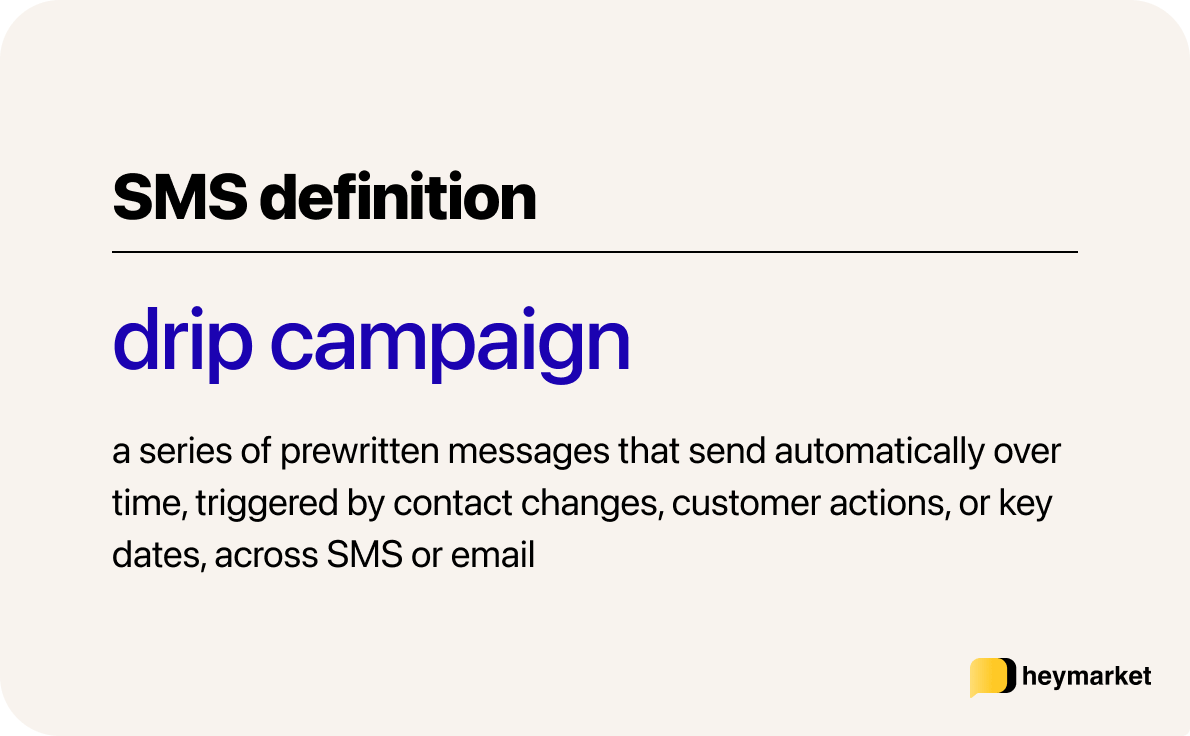
A drip campaign is a series of prewritten messages that send automatically over time. Each message is tied to a schedule or a trigger, like someone signing up for a list, abandoning their cart, or approaching a renewal date. Instead of sending reminders or follow-ups one by one, you build the sequence once and let it run in the background.
Drip campaigns can run through email, SMS, or both together:
- SMS drip campaigns are best for short, time-sensitive communication. They’re often used for reminders, quick updates, or nudges that encourage a reply since it’s easy for customers to fire off a text. And with open rates around 98%, SMS is one of the most reliable channels for reaching people quickly.
- Email drip campaigns work well for longer-form communication or content that needs visuals or formatting. They’re a good fit for detailed onboarding instructions, product recommendations, or promotional content that doesn’t fit in a short text.
Many businesses also combine the two for greater reach across their drip campaigns. For example, a detailed welcome email can introduce new customers to your service, followed by a short SMS the next day to see if they have any questions.
Benefits of drip campaigns
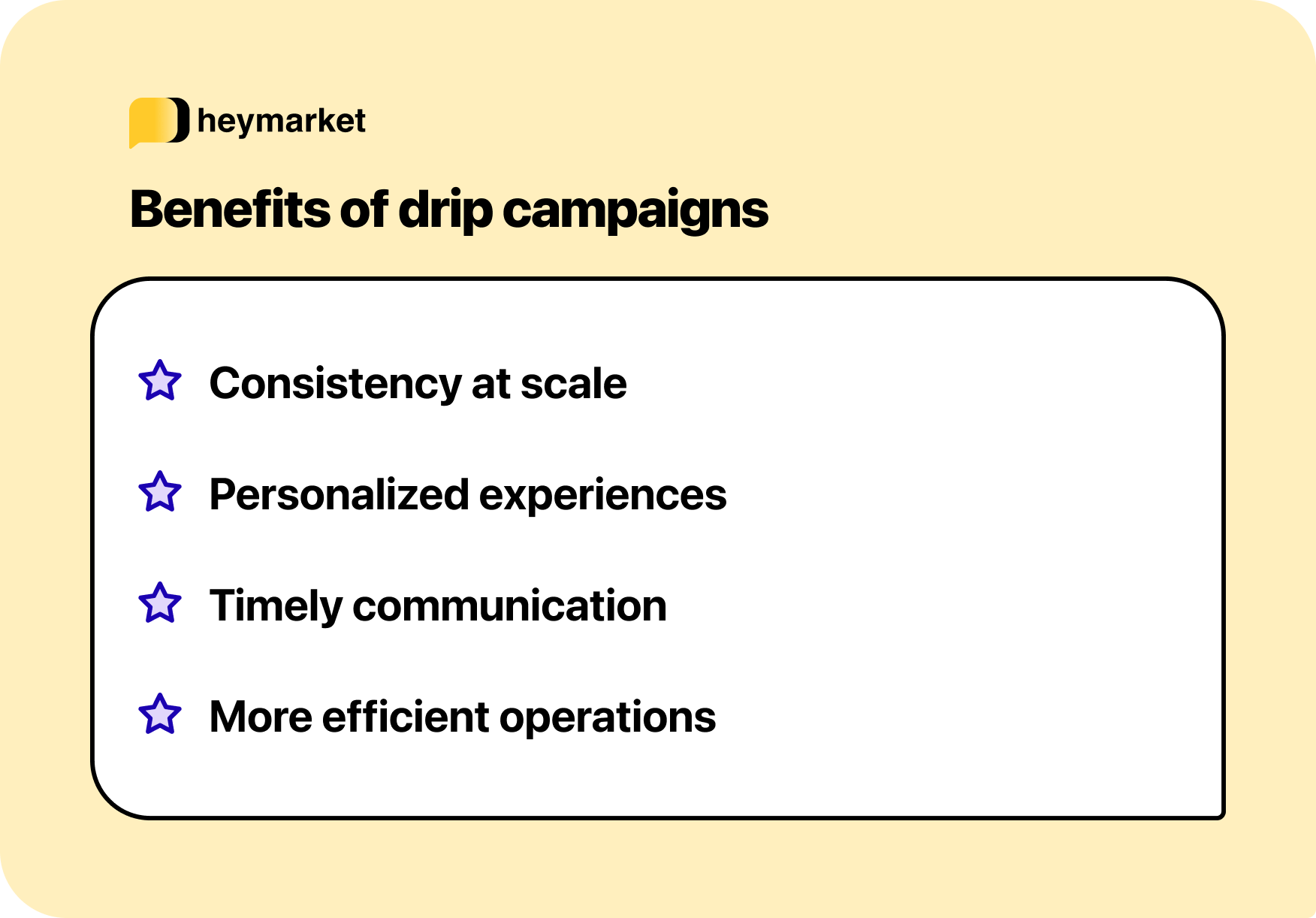
Drip campaigns make it easier to keep customers engaged without adding more to your team’s plate. By setting up structured, automated sequences, you can deliver consistent, personalized communication that provides:
- Consistency at scale: Manually following up with every customer isn’t realistic once your audience grows. A drip campaign ensures that every subscriber, lead, or customer receives the same thoughtful series of communications, no matter when they engage with you.
- Personalized experiences: Business communication platforms usually let you insert details like a first name, purchase history, or appointment time into each message. These personal touches make automated campaigns feel tailored, helping customers feel seen and valued.
- Timely communication: Drip campaigns let you map messages to customer actions and milestones. From an immediate welcome email after signup to a reminder text the day before an appointment, drips ensure the right message arrives at the right time.
- More efficient operations: Drip campaigns allow your team to set up campaigns once and let them run automatically. With templates, it’s even easier—you draft flexible message outlines, add custom fields, and reuse them across campaigns. That way, your staff spends less time writing and scheduling, and more time focusing on customers who respond.
Together, these benefits make drip campaigns one of the most effective ways to build and maintain customer relationships at scale. They help you boost revenue, improve satisfaction, and create the kind of reliable communication that keeps people coming back.
The anatomy of drip campaigns
How you set up your drip campaign determines who receives messages, when they arrive, and how the flow adapts. Understanding these elements helps you design campaigns that feel natural and effective from start to finish.
Targeting and triggers
Every drip begins with a trigger, or the event that sets the sequence in motion. Common triggers include:
- A new subscriber joining your list
- A customer making a purchase
- An abandoned cart
- A profile update, such as becoming a VIP
- A date-based milestone, like a birthday or renewal
In most cases, triggers come from tools you already use, like your customer relationship management (CRM) platform, point of sale system, or business communication app. When your drip campaign tool receives notice of the event, it automatically starts the sequence.
But triggers don’t just start campaigns—they can also end them. For instance, if a customer replies to a text, that action can automatically stop the sequence so your team can step in. This kind of branching logic ensures people don’t keep receiving automated messages after they’ve engaged.
To make triggers more powerful, businesses often pair them with contact segmentation. Segmentation organizes people into lists based on their behavior, profile, or stage in the customer journey. With dynamic lists, contacts are added or removed automatically as their information changes, ensuring that only the right people enter a given campaign.
A common example is a “new trial users” list that includes anyone who signed up within the past 14 days. The moment someone creates an account, they’re added to that list and automatically enrolled in an onboarding drip. If they convert to a paid plan, the system removes them from the trial list and moves them into a different campaign.
By pairing triggers with segmentation, you can deliver messages that are both timely and relevant, without having to manually manage who belongs where.
Timing and pacing
Once a campaign starts, the timing of each message is just as important as the content. Scheduling controls when steps go out. Some send immediately, like a welcome email, while others send after a set delay, such as a reminder two days later. Time-of-day rules can also help prevent messages from landing at awkward hours and help you maximize engagement with precise offers.
Using these tools, you can build well-paced campaigns that create a sense of momentum without overwhelming customers. A quick text reminder the day before an appointment feels helpful; three texts on the same day would feel intrusive.
By planning delays and cadences carefully, you keep communication natural and effective while minimizing unsubscribes.
Personalization and relevance
Drip campaigns perform best when they don’t feel generic. Personalization, often with templates and custom fields, lets you add details that make each message feel tailored, such as:
- A first name
- A recent purchase
- An appointment time
- A loyalty status or tier
Paired with segmentation, personalization ensures the right people get the right details. A VIP might receive a better offer than the rest of your list, while a new subscriber sees onboarding content rather than another marketing message.
Channel strategy
Choosing the right channel ensures your message reaches customers in the most effective way. Email provides space for detailed instructions, visuals, and long-form content. SMS is best for short, timely messages like reminders or quick follow-ups.
Combining both channels helps you learn more about contact preferences and match the message to the medium. For example, starting a seasonal sale with an eye-catching teaser email can build excitement, while a last-day reminder text ensures customers don’t miss their chance to buy.
Opt-outs and compliance
The final piece of a drip campaign is control. Customers should always have the ability to decide how and when they hear from you. Opt-in and opt-out tools make this simple, letting people unsubscribe by replying with keywords like STOP or UNSUBSCRIBE.
Compliance features also help you follow messaging rules, like honoring quiet hours for SMS and registering numbers under 10DLC guidelines.
By building these safeguards into every campaign, you respect your customers’ preferences and protect your business from regulatory issues.
8 drip campaign examples
With all their steps and conditions, drip campaigns can be hard to visualize. Below we’ve put together eight common drip campaigns you can use and provided some templates to help you get started—across SMS, email, and both channels.
SMS drip campaign examples
SMS drip campaigns excel as quick reminders and time-sensitive check-ins that you want customers to see as soon as possible. They’re also easier to respond to, making them ideal for scheduling, asking questions, and re-engaging cold leads who aren’t responding via less direct channels.
Appointment reminders
SMS excels at reminders because customers see texts quickly. This drip helps reduce no-shows by sending escalating reminders before an appointment, with a built-in option to reschedule and exit the drip.
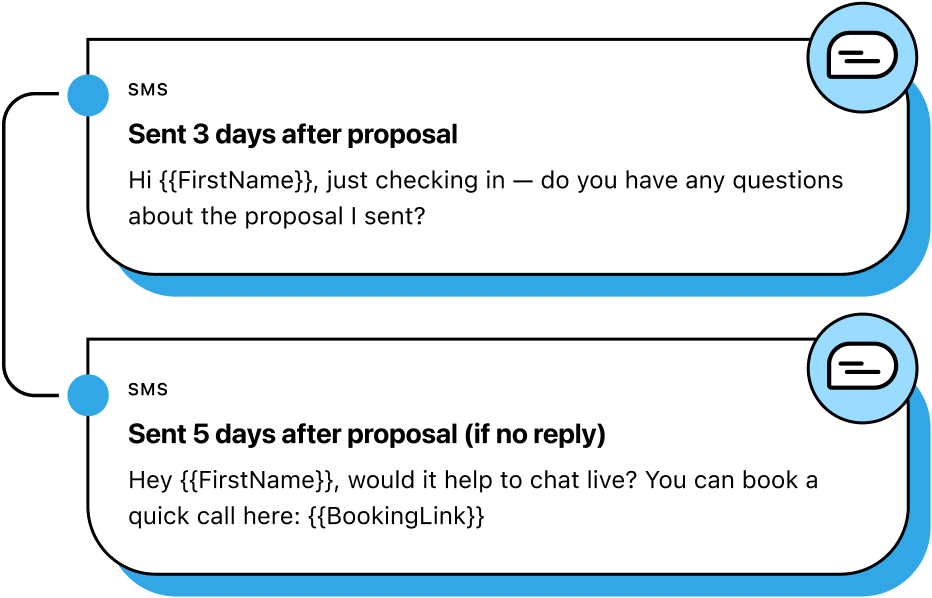
Warm lead follow-up
This SMS drip nudges prospects who received a proposal but haven’t replied, helping sales teams re-engage without being pushy. Once prospects reply, they exit the campaign.
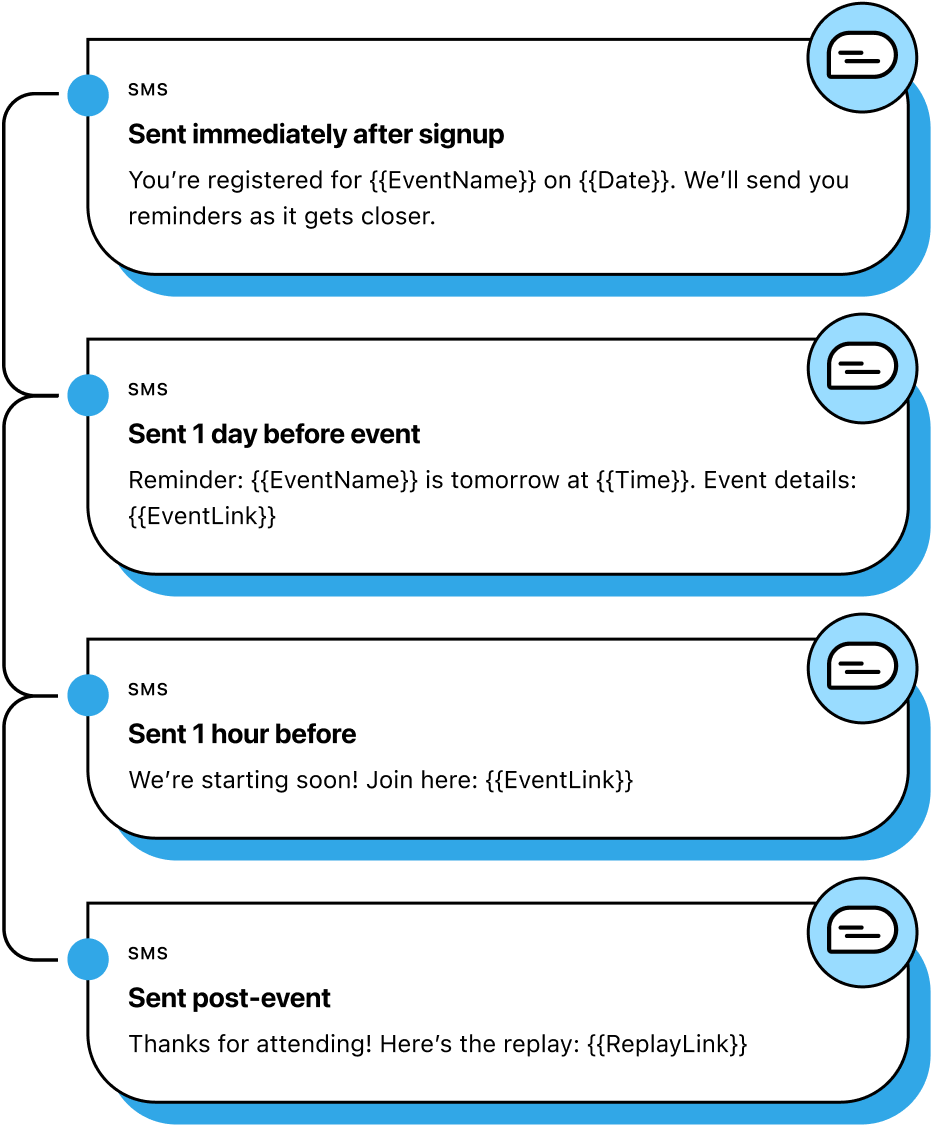
Event registration drip
This SMS drip builds engagement around an event by confirming registration, reminding attendees, and following up afterward.
Email drip campaign examples
Email drips shine when you need more space for storytelling, visuals, or detailed instructions. They’re especially effective for onboarding, nurturing leads, or guiding customers through multi-step decisions.
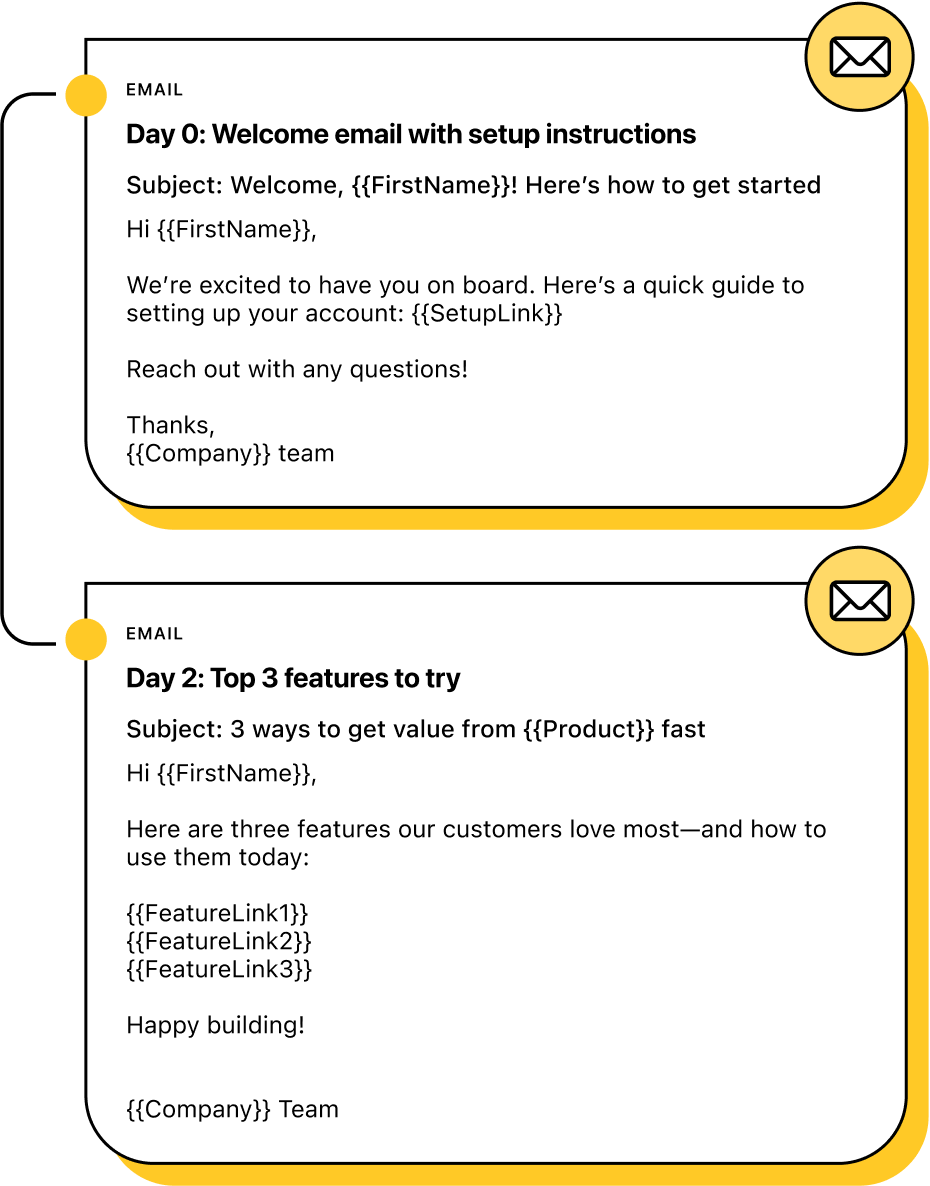
Onboarding tutorial series
This email drip helps new customers get set up gradually, avoiding overwhelming them while encouraging early success.
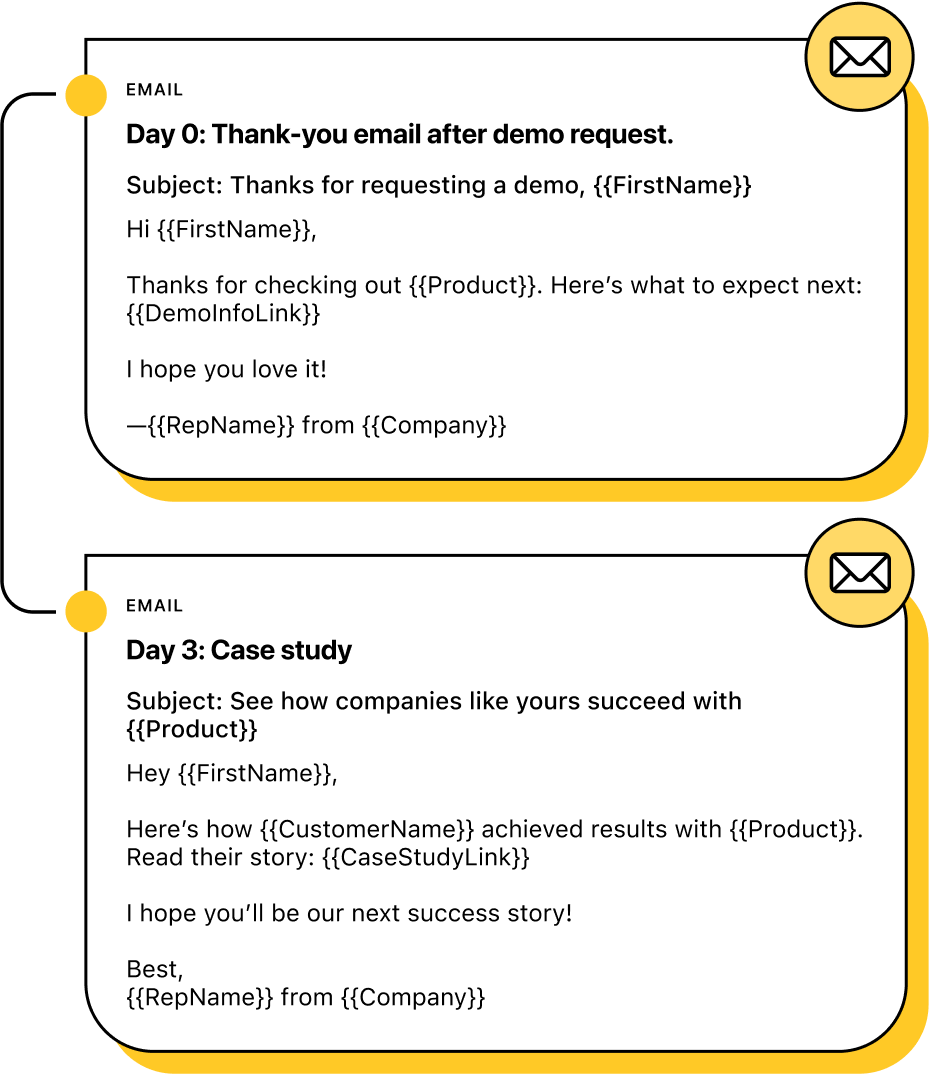
Lead nurture sequence
This sequence educates prospects and builds trust with them until they’re ready to buy.
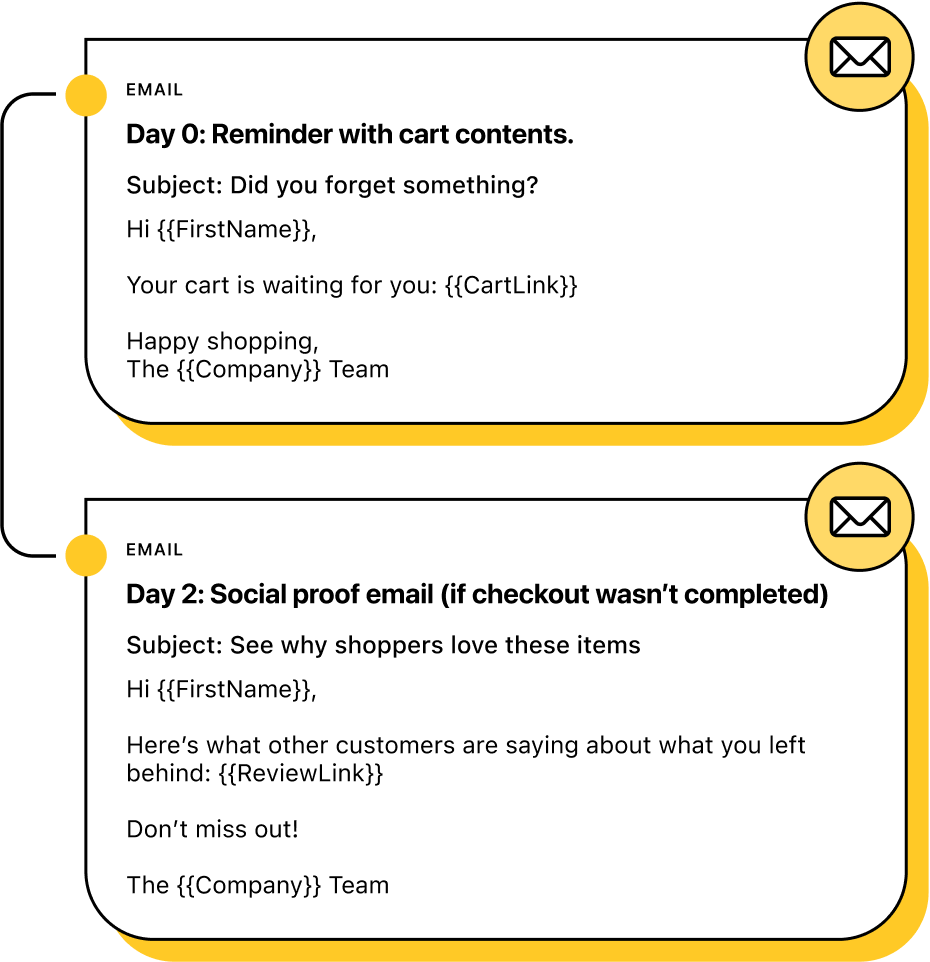
Abandoned cart series
This email drip reminds shoppers about items left in their cart and gives them a reason to complete checkout.
Omnichannel drip campaign examples
Campaigns are often even more effective when you pair email and SMS. Email delivers depth, while SMS ensures customers read urgent updates.
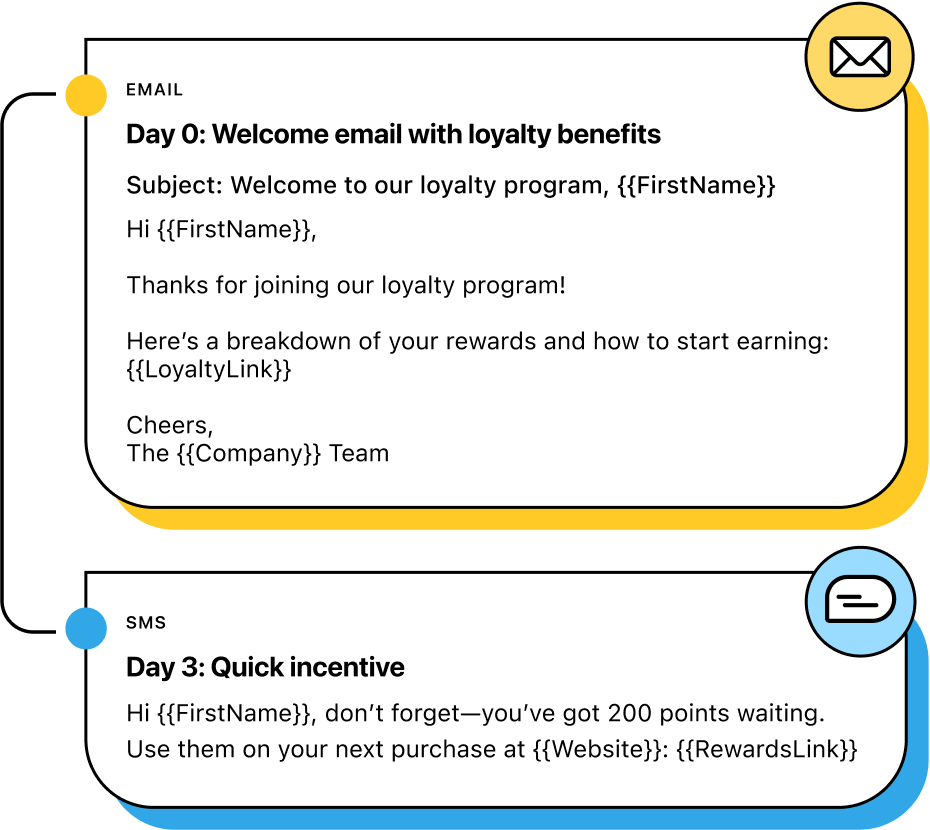
Loyalty program engagement
This drip builds excitement and engagement for loyalty members by mixing detailed rewards information over email with timely SMS nudges.
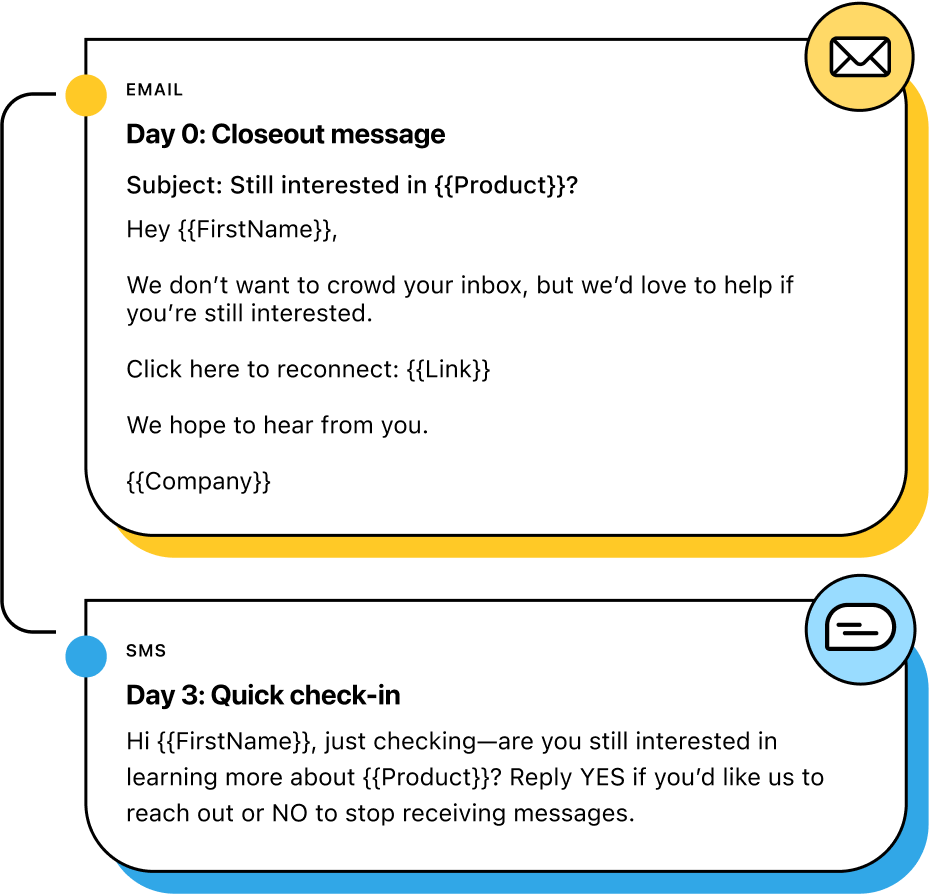
Re-engagement after no response
Combining channels helps revive disengaged leads when email alone isn’t working. If they respond, sales can pick the conversation up.
Best practices for drip campaigns
Even well-designed workflows can fall short if they’re too frequent, too generic, or poorly timed. But with the right approach, your drip campaigns can strike the right balance between helpful and respectful.
Here’s how to make them work:
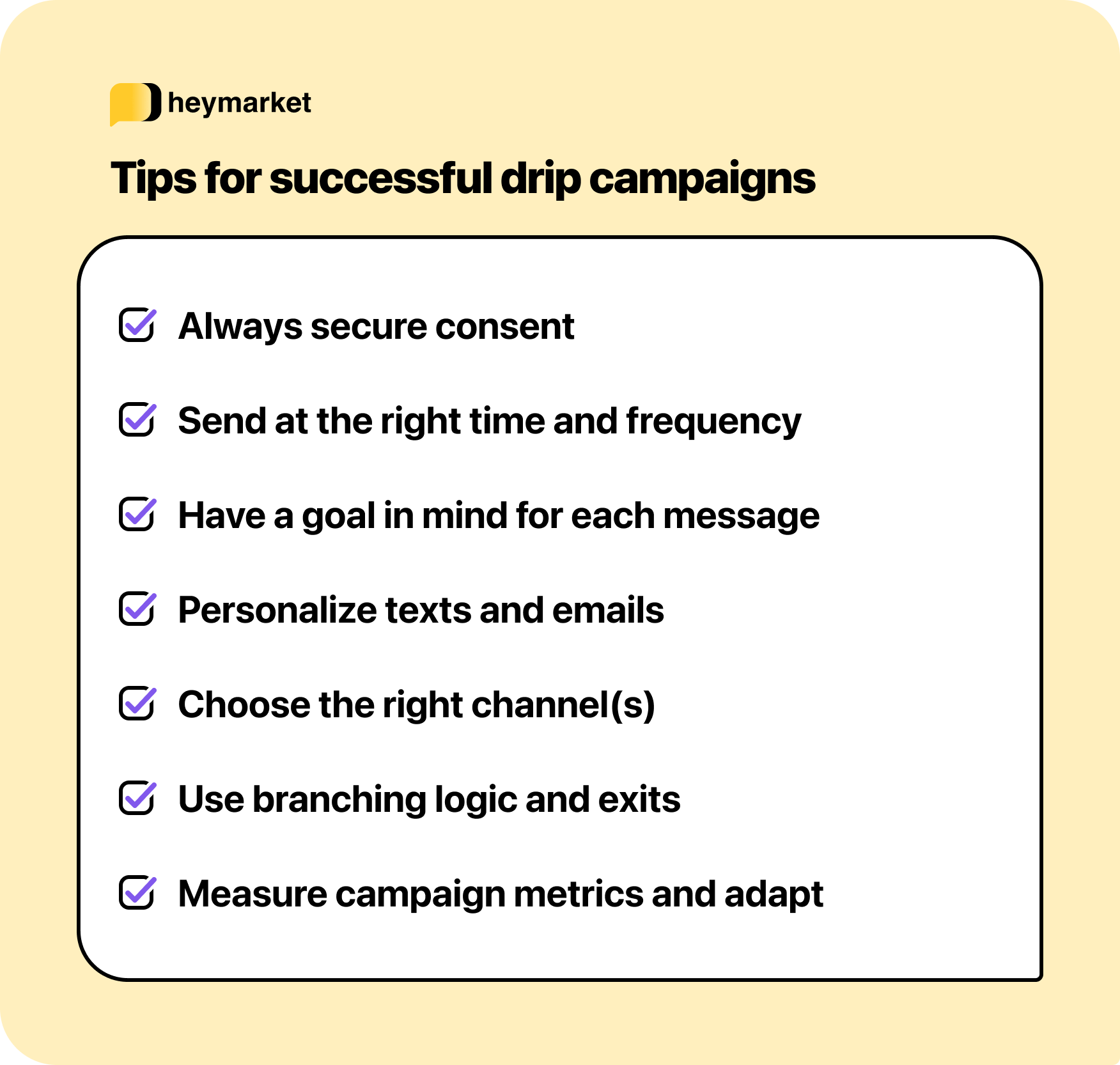
- Secure consent: Always begin with customer consent, whether through an SMS keyword, a signup form, or an online checkbox. On top of helping you stay compliant, this also ensures people expect your messages, increasing engagement.
- Respect timing and frequency: Drips work because they pace communication. Send emails every few days instead of all at once, and reserve SMS for timely updates or reminders. Over-communication and spamming are the fastest ways to increase unsubscribes.
- Keep messages focused: Each step in a drip should have a clear purpose, whether it’s to confirm an appointment, explain a feature, or share an offer. Short texts and concise emails outperform long, scattered messages.
- Personalize with context: Use data like names, purchase history, or loyalty status to tailor your communication—but only where it makes sense. A light touch feels thoughtful; overuse can feel forced.
- Use the right channel(s): Email and SMS each play different roles. Use email for storytelling and education, and SMS for reminders or urgent notices. When used together in an omnichannel campaign, they help engage customers across their favorite channels so important messages aren’t missed.
- Use exits and branching logic: Always build in conditions that stop or redirect a campaign when customers take action. If someone replies to a text, finishes onboarding, or makes a purchase, they shouldn’t keep receiving automated follow-ups for that same journey.
- Measure and refine: Track open rates, click-throughs, replies, and opt-outs. A/B test subject lines, send times, and call-to-action language. Small adjustments over time lead to stronger results.
When you follow these best practices, drip campaigns stay helpful, relevant, and welcome. They’ll help keep customers engaged while giving your team more time to focus on important conversations that require a human touch.
Keep customers engaged with smarter drip campaigns
Drip campaigns give businesses a reliable way to deliver the right message at the right time. Email drips help you get your message across, while SMS drips drive quick action when timing matters most. Together, they create an omnichannel messaging strategy that keeps customers connected, engaged, and moving forward.
With certain omnichannel messaging platforms, you can design, launch, and optimize both SMS and email drips from one place. Automations handle the scheduling, triggers, and branching logic, while every reply flows into an omnichannel shared inbox for your team to pick up the conversation personally. That balance of automation and human touch makes it easier to grow relationships without scaling your workforce.
Ready to start building smarter drip campaigns? Start your free trial of Heymarket today.