



Your customer communication channels are overflowing. Messages arrive through email, text, and chat faster than your team can organize them. Information is scattered, updates are delayed, and customers often reach out more than once before getting a clear answer. Outbound communication isn’t any smoother; follow-ups and reminders take extra time, and it’s easy for messages to slip through the cracks.
Without a connected process behind those conversations, maintaining clarity and consistency becomes difficult. Context gets lost between systems, and teams spend more time searching for relevant information than engaging customers. Meanwhile, every delay or repeated question hurts the customer experience, and over time, can lead to frustration, lost trust, and fewer repeat customers.
As your business grows, these challenges only intensify. New channels, higher message volumes, and larger teams complicate coordination further. Without the right tools and strategies in place, communication quality starts to decline.
By unifying channels, improving visibility, and automating repeatable tasks, teams can manage both inbound and outbound messages more efficiently. The result is a smoother experience for customers at every stage of their journey.
Why you should streamline customer communication
Simplifying how conversations move between channels, teams, and tools can help you deliver this kind of high-quality experience. With organized access to conversations, templates, and workflows, your team can stay coordinated and deliver consistent communication every time.
When done well, streamlined communication provides:
- Greater efficiency: Unified workflows help teams manage high message volumes with less effort.
- Consistent experiences: Shared processes and history keep tone, timing, and information aligned across channels.
- Proactive communication: Coordinated inbound and outbound workflows enable timely updates, reminders, and follow-ups.
- Scalability: Streamlined systems adapt easily as your team, channels, and customer base grow.
- Stronger relationships: Clear, coordinated communication builds trust and encourages long-term loyalty.
By refining how messages flow and how teams collaborate, you turn everyday communication into an organized, repeatable process that supports growth and helps your business deliver better experiences at scale.
How to streamline customer communication
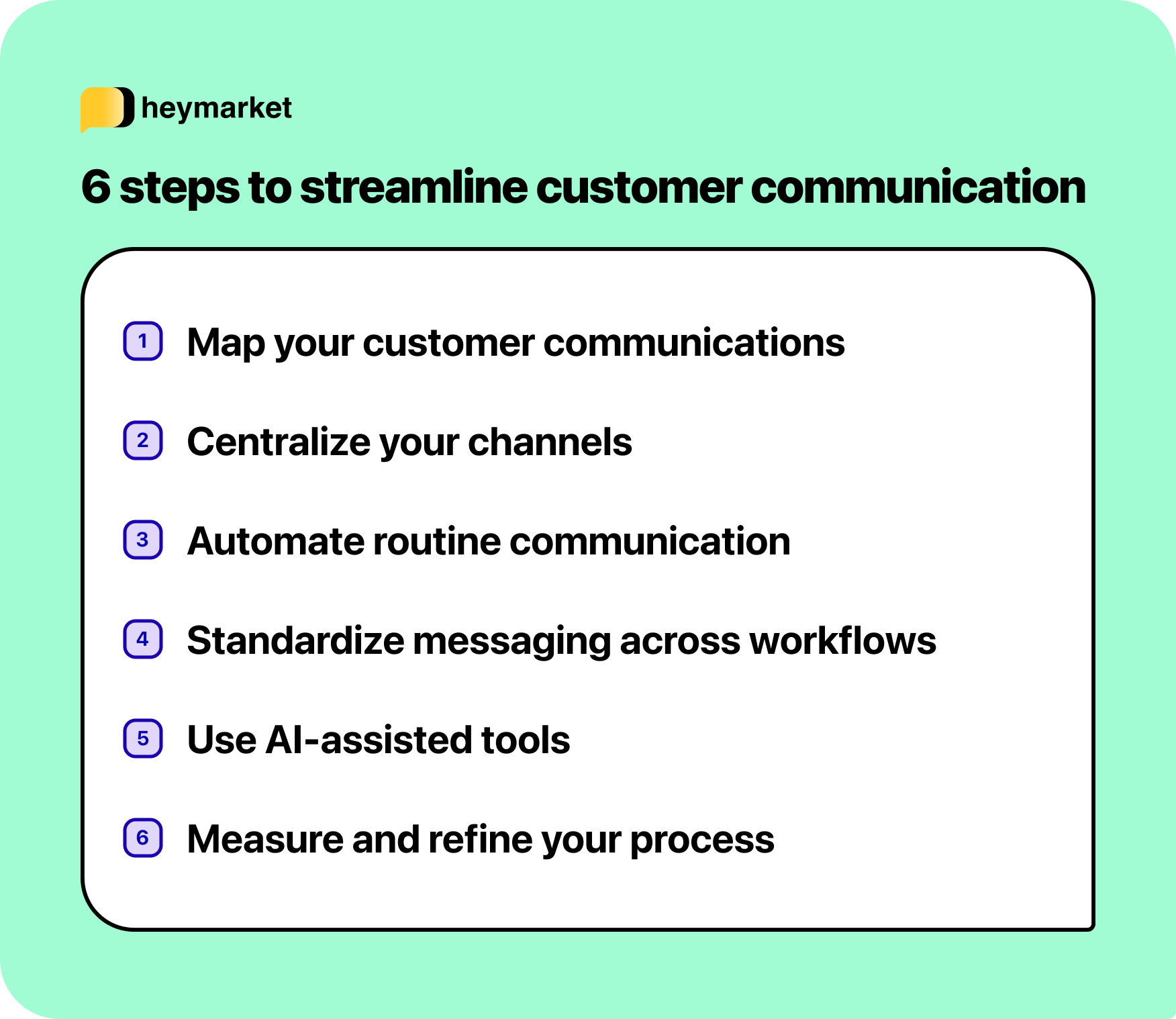
Streamlining customer communication means aligning your people, processes, and tools so every message feels coordinated and intentional. Here’s how to get started.
1. Map your customer communication journey
Begin by outlining every point where customers interact with your business, such as support questions, billing inquiries, appointment reminders, and order updates. For each stage, identify who manages communication, which channels are used, and where delays or duplications occur.
Examining each touchpoint helps uncover inefficiencies like manual follow-ups or duplicated effort across teams. Once you have a clear view of the process, it becomes easier to spot where automation or shared workflows can close gaps.
2. Centralize your communication channels
Managing multiple inboxes creates unnecessary friction. Centralizing all communication—across email, SMS, web chat, and messaging apps—into an omnichannel shared inbox ensures your teams work from the same context.
When messages, history, and team notes live in one place, coordination becomes seamless. That means no missed updates, no repeated messages, and no lost visibility when conversations pass between team members or departments.
A unified workspace also supports proactive outreach. You can segment audiences, send timely follow-ups, and communicate through the channels customers prefer—all within one organized system with full multichannel context. The result is faster responses, smoother collaboration, and a consistent customer experience from start to finish.
3. Automate routine communication
Routine messages—like confirmations, reminders, and updates—can take up more time than they should. Automating these touchpoints keeps communication on schedule and ensures customers receive information exactly when they need it.
Automations can trigger messages based on specific actions, such as a customer scheduling an appointment or submitting a form. You can also set up keyword-based auto-replies to handle FAQs, route incoming messages to the right team, or send after-hours responses that set clear expectations.
Enhanced automations may also offer conditional logic; for example, if contacts don’t respond to a message, they can send a follow-up. Meanwhile, personalization with custom fields keeps messages relevant and human at scale.
Automation scales responsiveness and accuracy without increasing workload, allowing you to focus on high-value conversations.
4. Standardize messaging across workflows
Automation improves speed, but standardization ensures consistency. Shared workflows and templates ensure customers receive clear, accurate information no matter who’s responding or which channel they use.
Templates define structure and tone for common message types, while workflows outline how interactions move between departments or campaign stages. Together, they help every message reflect your brand voice and minimize errors.
5. Use AI-assisted tools to scale consistency and speed
As you scale up your messaging, it becomes progressively harder to maintain answer accuracy and brand voice. AI-assisted tools can help you improve mass communication while keeping messages consistent, relevant, and on-brand.
These tools can suggest replies, summarize long message threads, and help you compose responses that match your brand tone. They can also identify intent and highlight conversations that need extra attention, all in real time. This allows you to handle more messages without losing the human touch that customers value.
When integrated into your communication platform, AI assistance becomes a reliable partner that helps you respond faster, maintain consistency across channels, and ensure every message reflects the quality and professionalism your business is known for.
6. Measure and refine your communication process
Regularly track metrics such as response times, message volume, completion rates, and customer satisfaction to evaluate how well your process performs. Track delivery and engagement by channel to evaluate proactive outreach.
Review your automations and workflows to see where messages slow down or opportunities for improvement appear. Use those insights to refine templates, update processes, and adjust automation logic. Over time, these small improvements add up to faster responses, smoother collaboration, and stronger customer relationships.
What to look for in an omnichannel messaging platform
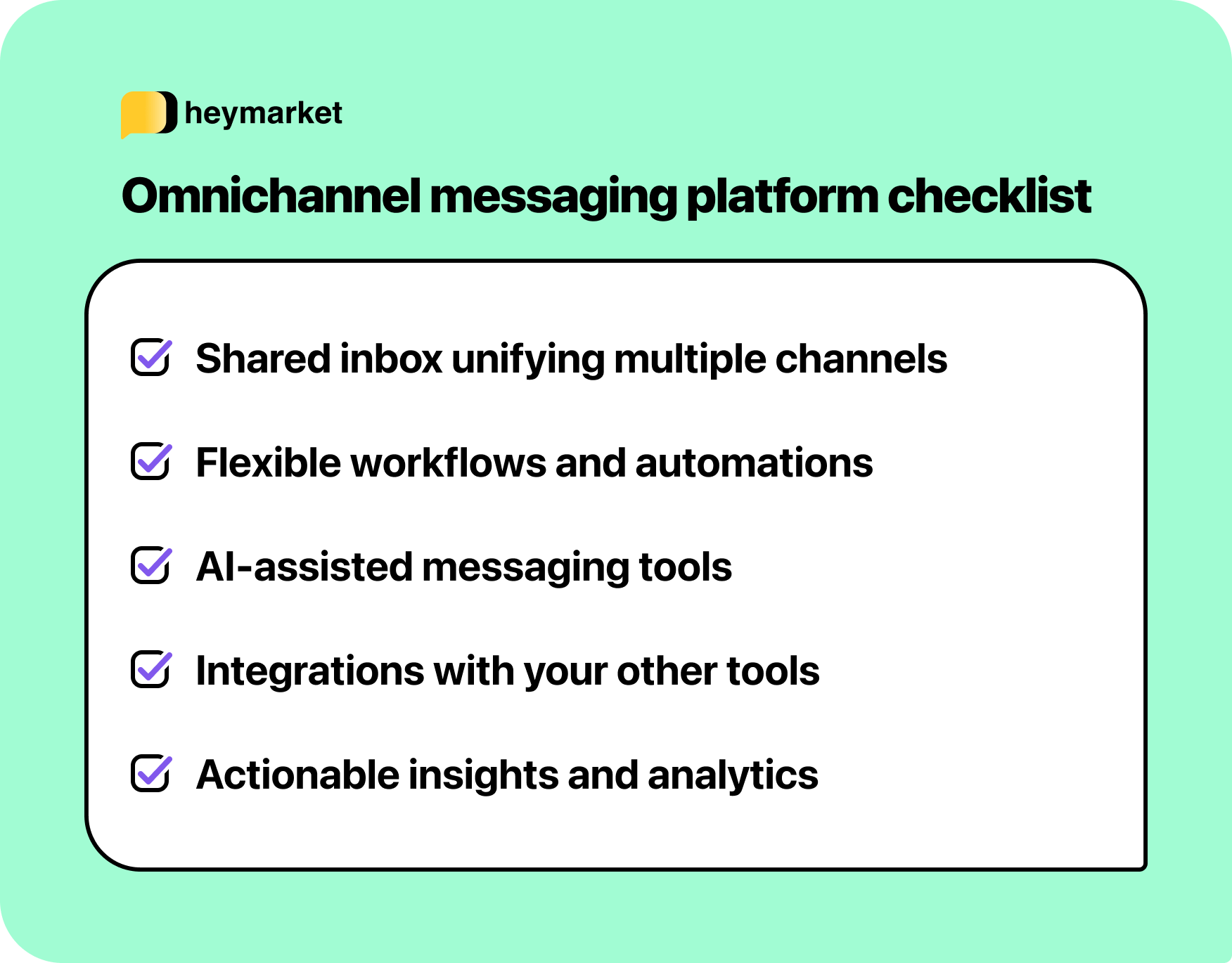
The right technology is what makes streamlined communication possible. Once you’ve optimized your processes, you need an omnichannel business messaging platform that connects every channel, supports efficient workflows, and scales as your business grows.
Here’s what to prioritize when evaluating your options.
Shared inbox with unified customer context
Your communication platform should provide a shared inbox that brings every customer message—email, SMS, and chat—into one organized view. With all past messages, notes, and updates stored together, your team can see full conversation histories at a glance and respond with confidence.
This unified view eliminates duplicate replies and maintains continuity as conversations move between channels.
Flexible automation and workflows
Look for automation tools that adapt to your communication process. Triggered actions, message assignment and routing, and scheduled follow-ups can eliminate manual work and reduce missed messages. The best platforms let you build visual workflows that reflect your unique business logic, from sending reminders after specific time frames to removing contacts from workflows based on action or inaction.
Flexible automation allows you to scale communication without adding complexity, keeping interactions timely and consistent.
AI-powered communication
AI should enhance, not replace, how your team members communicate. Look for a platform that uses AI to help your team stay efficient and consistent at scale. Your AI-assisted messaging tool should summarize long message threads, tailor responses to match your brand tone, and reference your company’s knowledgebase and conversation history to provide accurate, context-specific recommendations.
Seamless integrations
Communication doesn’t happen in isolation. The platform you choose should integrate easily with your CRM, helpdesk, scheduling, and marketing tools. These integrations ensure your messages reflect the latest customer data, reduce duplicate entry, and keep teams aligned, forming a closer link between customer service, sales, and marketing.
Actionable analytics and insights
Visibility into performance helps you continuously improve. Choose a platform that provides clear reporting on response times, resolution rates, and engagement trends. Insights into conversation history or automation performance can highlight where processes slow down or where customers need more proactive communication.
Streamlined communication builds stronger relationships at scale
When your communication systems work together, every interaction becomes more efficient and consistent. Unified channels, automated workflows, and shared visibility create a connected experience that strengthens trust and makes engagement easier to manage as your business grows.
Ready to streamline your communication? Schedule a demo for an omnichannel messaging platform today.