



Today’s customers expect businesses to make it easy for them to connect on their terms. Sometimes that means sending a quick text while they’re on the go, writing an email from a laptop, or starting a live chat when they need immediate answers.
At the same time, businesses need to be able to reach customers on their preferred channels without starting from scratch each time. Service notifications, reminders, and marketing campaigns are all more effective when they connect to conversations already in progress or previous interactions, rather than arriving as disconnected messages.
When channels aren’t aligned, the experience breaks down. A customer might email with a question, then text later for urgency, and end up repeating themselves because the history doesn’t carry over. Or, they receive two different promotional messages—one via email and one via SMS—with conflicting information that makes the campaign feel disjointed. These slow responses, repeated questions, and missed opportunities all chip away at trust, which can cost you new sales and repeat customers.
That’s why communication systems can’t operate in silos. Multichannel and omnichannel platforms both expand the ways you can reach customers, but they handle context very differently.
Keep reading to learn the difference between omnichannel and multichannel messaging, and why carrying history across channels is essential for better customer experiences.
What is multichannel messaging?
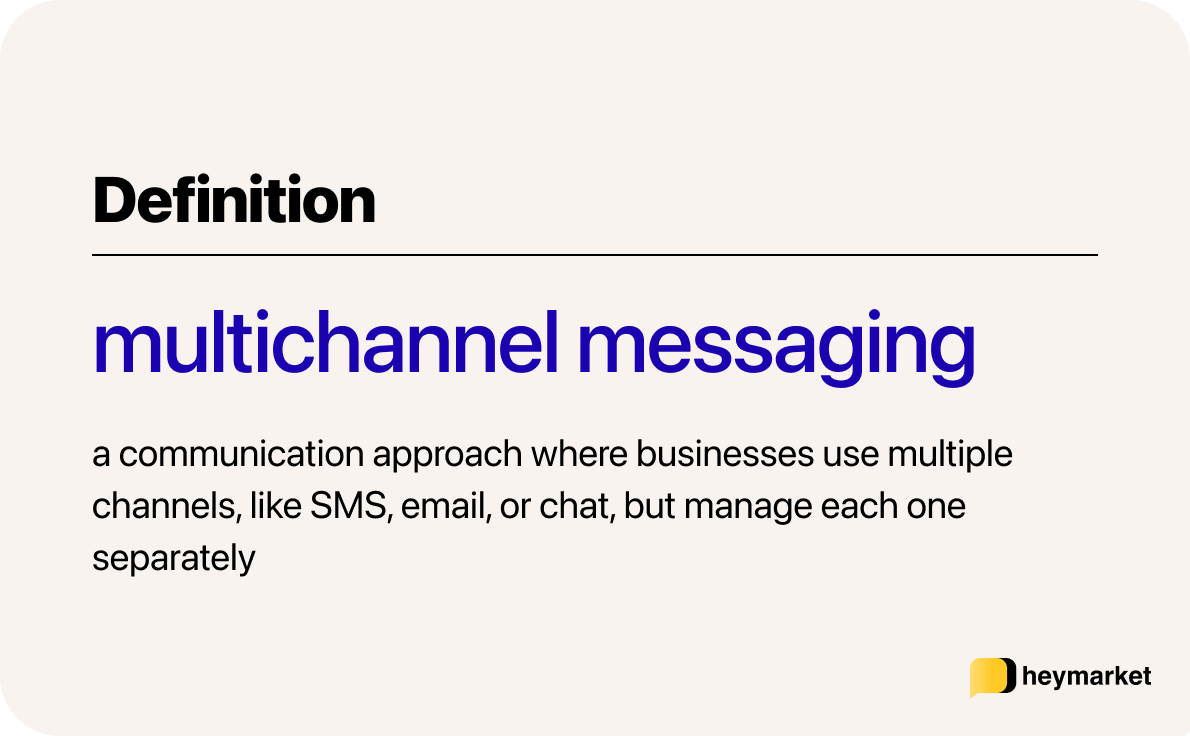
Multichannel messaging means giving customers more than one way to connect with you. That might include email, SMS, and live chat. Each channel increases accessibility and lets customers choose the method they’re most comfortable with.
But in a multichannel setup, each channel operates in its own lane. Emails live in an inbox, texts in an SMS platform, and chats in a separate tool. When customers switch channels, the thread doesn’t follow, so context is easy to lose.
For teams, this often means toggling between systems, duplicating campaigns, and trying to piece together customer context manually. Customers may end up repeating themselves, while agents risk slow or inconsistent responses.
Multichannel can work well for smaller teams or simple use cases, like sending occasional updates or handling a few inquiries per channel. But as conversations grow in volume or complexity, the gaps become harder to ignore.
What is omnichannel messaging?
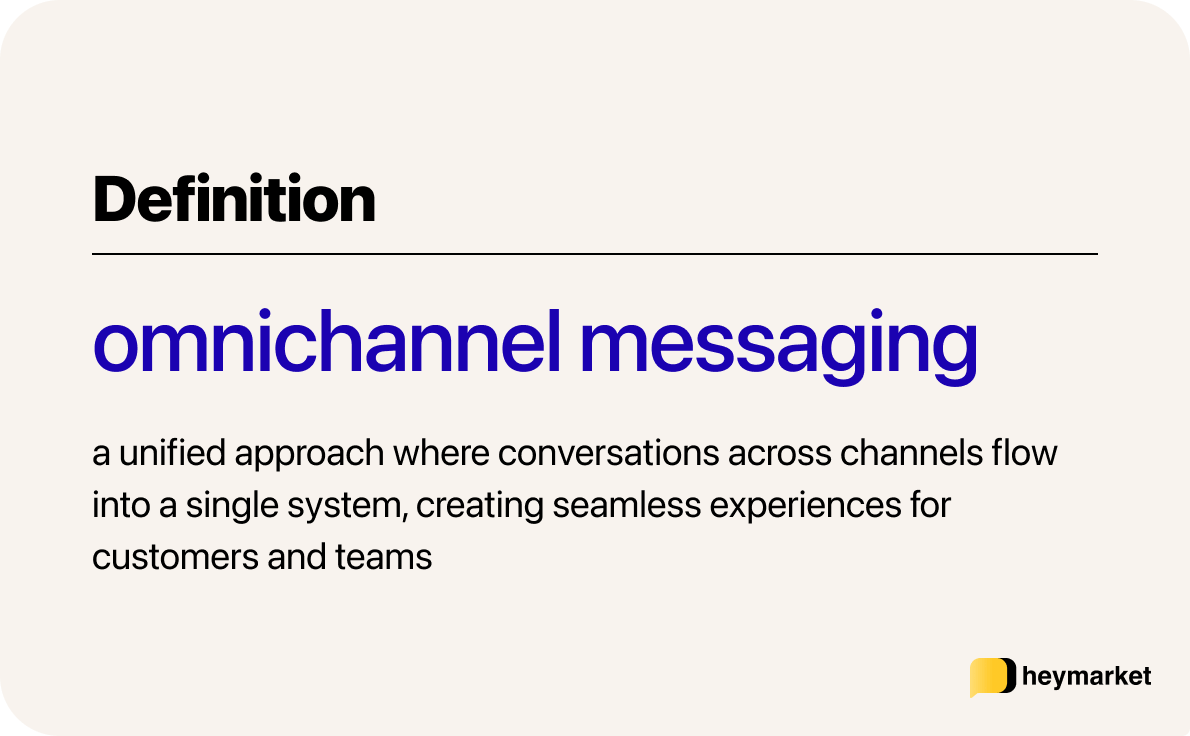
Omnichannel messaging connects all your channels into one continuous experience. Instead of treating an email, a text, and a chat as three separate threads, they all appear together in a single system.
For customers, this means no more repeating themselves. A billing question asked by email and followed up by text shows up in the same conversation. For teams, it means having full context at a glance, plus the ability to assign, comment, and collaborate without confusion.
Omnichannel also strengthens outbound communication. A promotional email can be paired with a follow-up SMS, and if a customer replies by text, the team sees it right in the same thread. Automations can adjust timing or channel based on how customers interact, while opt-ins and preferences stay consistent across the board.
If multichannel expands communication options, omnichannel connects them. Customers get seamless, personalized interactions, while teams save time and reduce errors by working from a single system.
Comparing multichannel and omnichannel messaging
Both multichannel and omnichannel expand customer access, but they shape the experience—and your team’s productivity—in very different ways.

Customer experience
In a multichannel system, customers can choose how they reach you. They may send a text, email, or chat, but when they switch channels, the conversation doesn’t follow them. This can lead to them repeating themselves or clarifying details more than once, slowing down the sales process and customer service resolutions.
Omnichannel solves this by linking every message from a contact into a single conversation. Customers can move between channels naturally, and the context always carries through. No matter who handles the conversation, your team sees the full history and can respond quickly and accurately.
Team efficiency
Managing multiple inboxes or tools is part of the reason multichannel communication strategies struggle to scale. Teams have to monitor each channel separately, which slows responses and risks duplicate work.
With an omnichannel approach, everything is consolidated into a shared inbox with centralized notifications. Agents see every message in one place, making it easier to assign, collaborate, and respond quickly. And because everything lives in a single inbox, teams can handle growing message volume without adding extra tools or complexity.
Campaigns and automations
Campaigns in a multichannel system stay confined to the channel where they start. An email newsletter won’t connect to a text campaign, even if they target the same audience.
Omnichannel campaigns span across channels. For example, if an email isn’t opened, the system can send a follow-up text automatically. With that cross-channel insight, you can target customers on their preferred channels for higher response rates and engagement.
Data and compliance
Customer preferences and opt-ins are often siloed in multichannel setups. That can lead to inconsistent communication, like continuing to message someone who already opted out on another channel.
Omnichannel centralizes data so customer preferences apply everywhere, reducing compliance risks and reinforcing trust. With regulations and expectations around privacy growing stricter, this unified approach becomes essential for staying compliant with 10DLC, CAN-SPAM, and other regulations.
Messaging platform types and where they fit
When exploring messaging platforms, you’ll find they generally fall into three categories: single-channel tools, multichannel systems, and omnichannel workspaces. Each comes with its own strengths, limitations, and prospective use cases.
Single-channel tools
These are platforms built for one purpose, such as SMS-only apps or email-only inboxes. They usually come with straightforward features such as message scheduling, contact lists, or simple templates. Because they’re focused, they’re easy to set up and use.
Single-channel tools work well for businesses with very specific needs, such as sending appointment reminders by text or managing a marketing newsletter. But they don’t scale well once customers start engaging through multiple channels. Teams end up layering on additional tools, and each one becomes another system to manage.
Multichannel systems
Multichannel platforms expand on this by supporting several channels, typically SMS, email, and sometimes chat. They give businesses the ability to manage campaigns and conversations in more than one place, often with channel-specific reporting and basic automation.
These systems are best for companies that want to broaden accessibility quickly without changing too much about their existing workflows. For example, a retailer that mostly relies on email might add SMS campaigns through a multichannel system to reach mobile-first customers. The limitation is that each channel still runs somewhat independently—campaigns are built per channel, inboxes are usually separate, and customer data isn’t always unified.
Omnichannel workspaces
Omnichannel platforms are designed to bring everything together. Instead of operating channel by channel, they connect SMS, email, chat, and even messaging apps into a single workspace. Teams typically work from an omnichannel shared inbox, where conversations from every channel appear in one thread, making it easier to assign, comment, and respond without confusion.
Beyond inbound communication, omnichannel platforms also centralize outbound campaigns. Businesses can build one campaign that spans SMS and email, track responses in real time, and see every reply tied back to the customer’s full history. Automation takes this a step further by allowing workflows to be triggered by customer actions or data fields, automatically choosing the right channel and timing. For instance, if a customer doesn’t engage with a promotional text, the system can send a more context-rich and engaging email that sweetens the deal.
Omnichannel personalization is another advantage. Instead of creating and copying messages for each individual channel, teams can use shared templates with merge tokens and custom fields across SMS and email. Alongside rich custom profiles powered by multi-channel insights, this makes it easier to send consistent, personalized messages at scale. Auto-replies are also more effective in this setup because they can respond instantly on any channel without needing separate rules or duplicated content.
Data management is equally important. Omnichannel platforms maintain a single contact record across channels, with fields for preferences and opt-ins. This makes it easier to stay compliant with regulations like 10DLC and CAN-SPAM, and ensures customer choices are respected consistently. Many also integrate directly with CRMs, help desks, and other core systems, giving businesses a unified view of customer relationships.
Omnichannel workspaces are best for teams with growing message volume, multiple departments handling customer communication, or businesses running complex campaigns across several channels. By consolidating tools, they not only create a smoother experience for customers but also simplify everyday workflows for better efficiency at scale.
Omnichannel vs multichannel: not just more channels, but better conversations
Adding more channels is only the first step in creating better customer communication. The real difference comes from how those channels work together. Multichannel messaging broadens your reach, but it often leaves customers repeating themselves and teams juggling separate tools. Omnichannel messaging closes those gaps by connecting every conversation, campaign, and preference in one place.
For businesses, that means more efficient workflows, stronger compliance, and campaigns that actually reflect how customers engage. For customers, it means faster responses, smoother journeys, and a consistent experience no matter how they choose to connect.
If your team is ready to move beyond simply adding channels and start unifying them, an omnichannel platform is the way forward. Tools like a shared inbox, connected campaigns, and automated workflows can transform the way you communicate, helping you deliver a seamless experience at scale.
Ready to see how omnichannel messaging can work for your team? Start your free trial or book a demo today!