




You get a text. You read it. You start typing a reply. You delete it. You write it again, but that draft doesn’t feel right either.
Unlike calls, texting compresses tone, context, and intent into a tiny box. Without a voice or other social cues, a message that sounds right in your head won’t always come across the same way on the other person’s screen.
Fortunately, a good response doesn’t need perfect wording. It just needs to be clear, appropriate for the relationship, and relevant to what the other person initially sent you. When you focus on those fundamentals instead of agonizing over every word, it becomes much easier to respond without overthinking.
This guide will show you how to respond confidently to all kinds of texts, whether you’re talking to friends, family, or professionals, so you can reply with confidence and move on.
How to respond to a text when you’re not sure what to say
When you have trouble responding to a text, it’s usually because you’re trying to figure out several things—tone, timing, boundaries, and clarity—all at the same time. That makes it harder to get your message across effectively, especially in high-stakes or emotional conversations.
With these tips, you can ensure you understand their message, respond appropriately, and make the conversation productive, even if it’s just a quick check-in.
Start with intent: what are they actually asking for?
Before you write anything, take a moment to identify the goal of the message. Most texts fall into a small set of intents, and your reply works better when you know which one you’re dealing with.
Common intents include:
- Information: they need an answer or decision to move forward
- Coordination: they want to make or confirm a plan
- Reassurance: they’re checking that things are okay or on track
- Support: they’re sharing something emotional and want care
- Connection: they’re checking in and want a conversation
Once you can name the intent, you stop guessing what to say and focus on helping the conversation move forward.
Lead with the answer: make your first line do the work
If the message includes a question or request, answer it early. That keeps you from overcomplicating the reply and reduces unnecessary back-and-forth.
After the answer, add only what helps move things forward:
- Context: one sentence if it prevents confusion
- Next step: what happens now and when
- Emotional tag: a short line that shows intent or care
This structure works across situations, from making plans to sharing updates, because it keeps the point of your message upfront and avoids overcomplicating your intent.
Match the relationship: write for the person, not the platform
The same message can come across as warm, neutral, or cold depending on who’s sending or receiving it. Texting generally feels more casual by default, but your tone still needs to match the relationship and the moment.
As a general guide:
- Close friends or family usually expect a casual tone and some personality.
- New connections benefit from friendliness with a bit more structure.
- Coworkers and managers expect clarity, organization, and time awareness.
- Customers and clients look for reassurance and clear next steps.
If you’re unsure, default to clear and neutral. It’s easier to loosen your tone later than to walk back a message that feels too casual or abrupt.
Add a tone line when clarity isn’t enough
Text strips away vocal cues, so efficiency can sometimes read as indifference. A short tone line helps restore intent without changing the substance of your message.
For example, “I can’t today” and “I can’t today—thanks for understanding” communicate essentially the same information, but they feel very different to receive.
The same idea applies in business messaging. “Your item will be shipped tomorrow” and “Your item will be shipped tomorrow. Very sorry for the delay!” both set clear expectations, but one acknowledges the situation while the other can come across as cold.
You don’t need a tone line every time. It’s most useful when you’re being brief, setting a boundary, or replying in a moment where tone could be misread.
How to respond to a personal text
Personal texts can be deceptively tricky. They’re informal, but they still carry emotional weight—especially when timing is off, plans are unclear, or feelings are involved. A message can be simple on the surface and still leave you wondering what tone to strike, how much to say, or whether you even need to reply right now.
In this section, you’ll see common personal texting scenarios with an example of an incoming message and a few reply options. Use them as starting points, then adjust for your relationship, your availability, and what you want the conversation to do next.
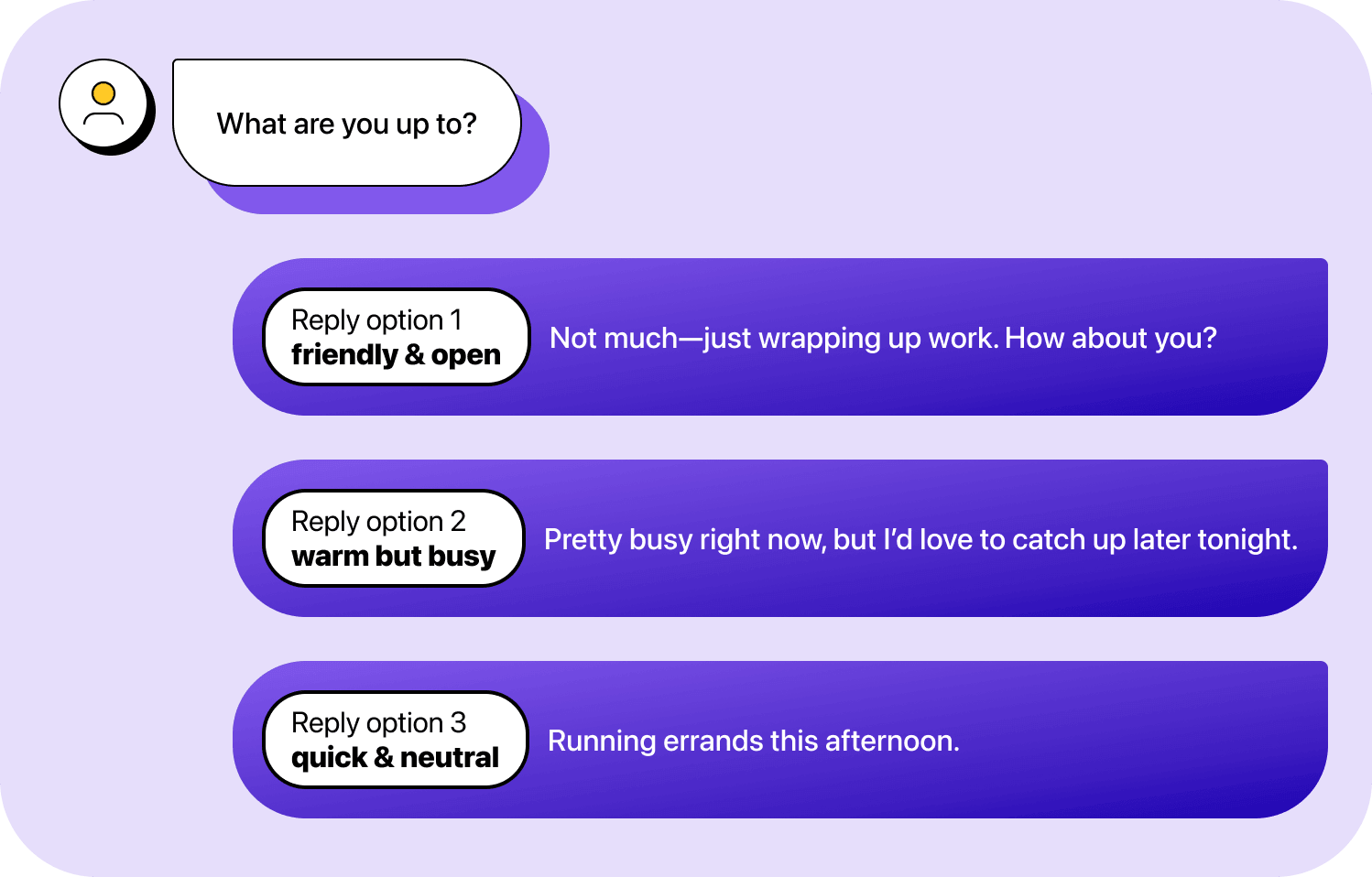
Casual check-ins and small talk
These texts are usually an invitation to connect, not a request for a detailed update. Your goal is to signal interest and match the other person’s energy. If you’re busy, you can still reply in a way that keeps the door open.
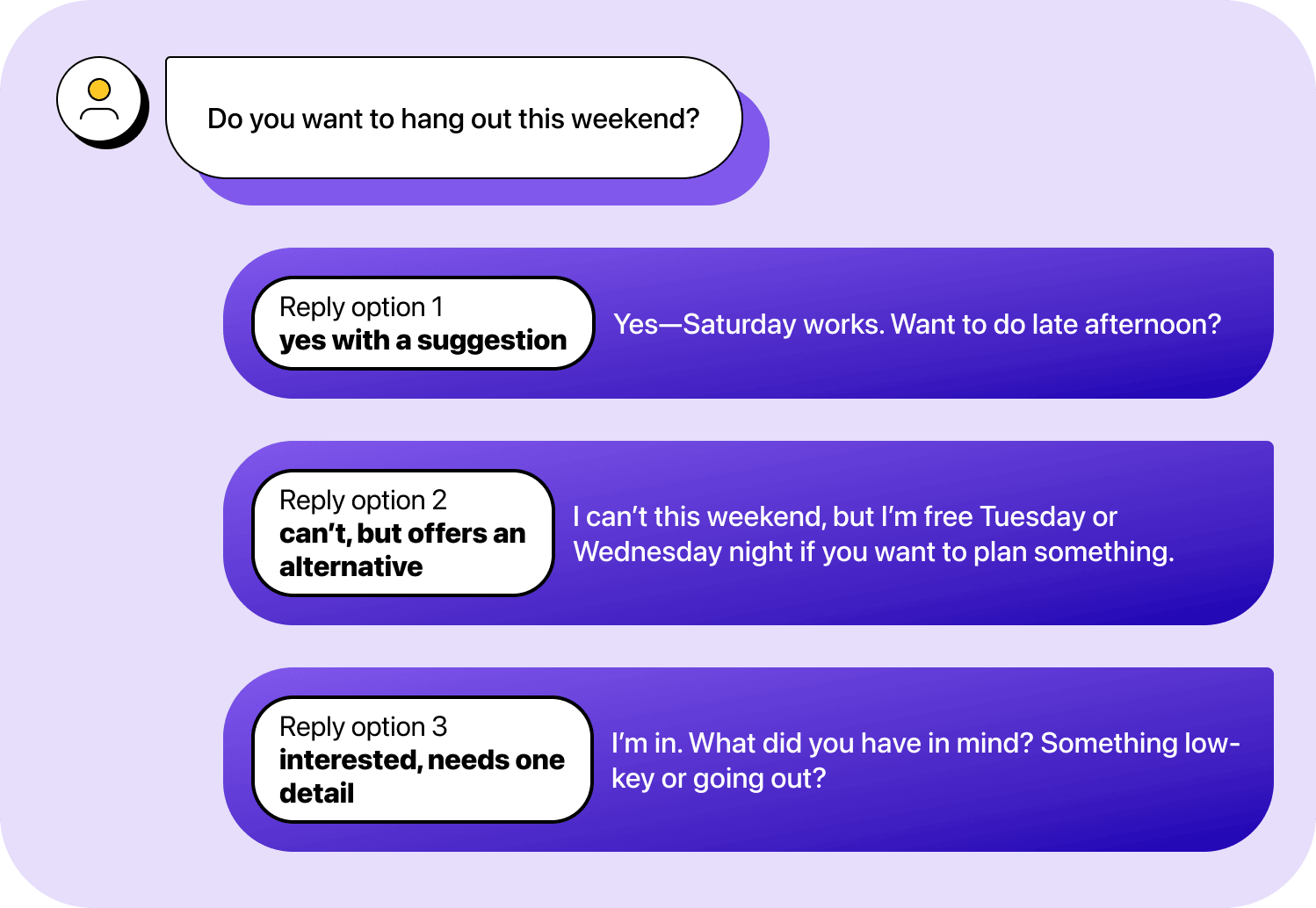
Making plans and confirming details
Making plans can go off the rails when your texts are too vague. The easiest way to move things forward is to answer clearly, suggest a concrete time, and ask only one question if you need more detail. A little structure here prevents a long back-and-forth.
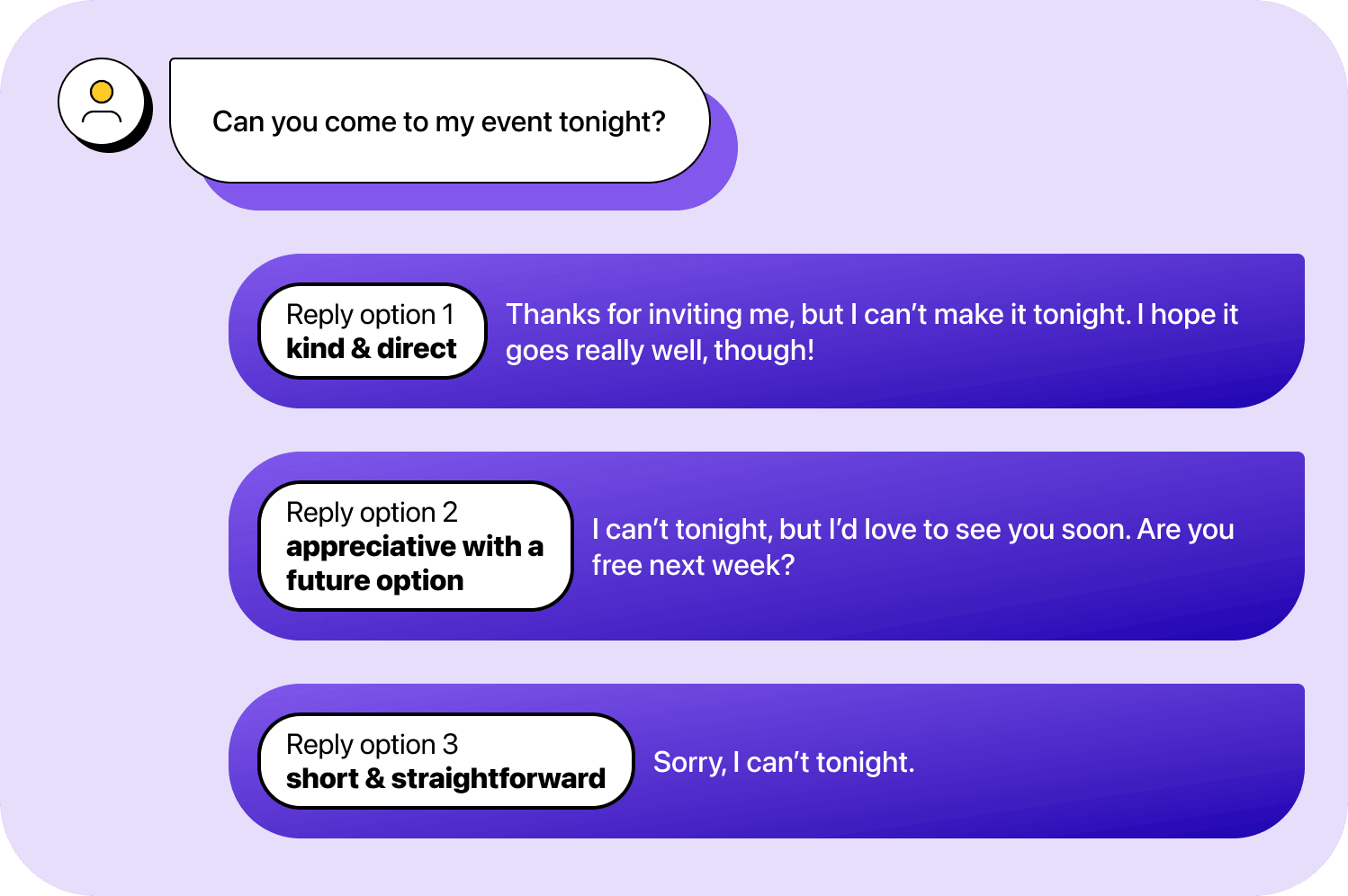
Declining invites or requests
A good “no” is simple, kind, and easy to understand. You can be warm without overexplaining, and you don’t need to offer an alternative unless you actually want to. The goal is to be clear while protecting the relationship.
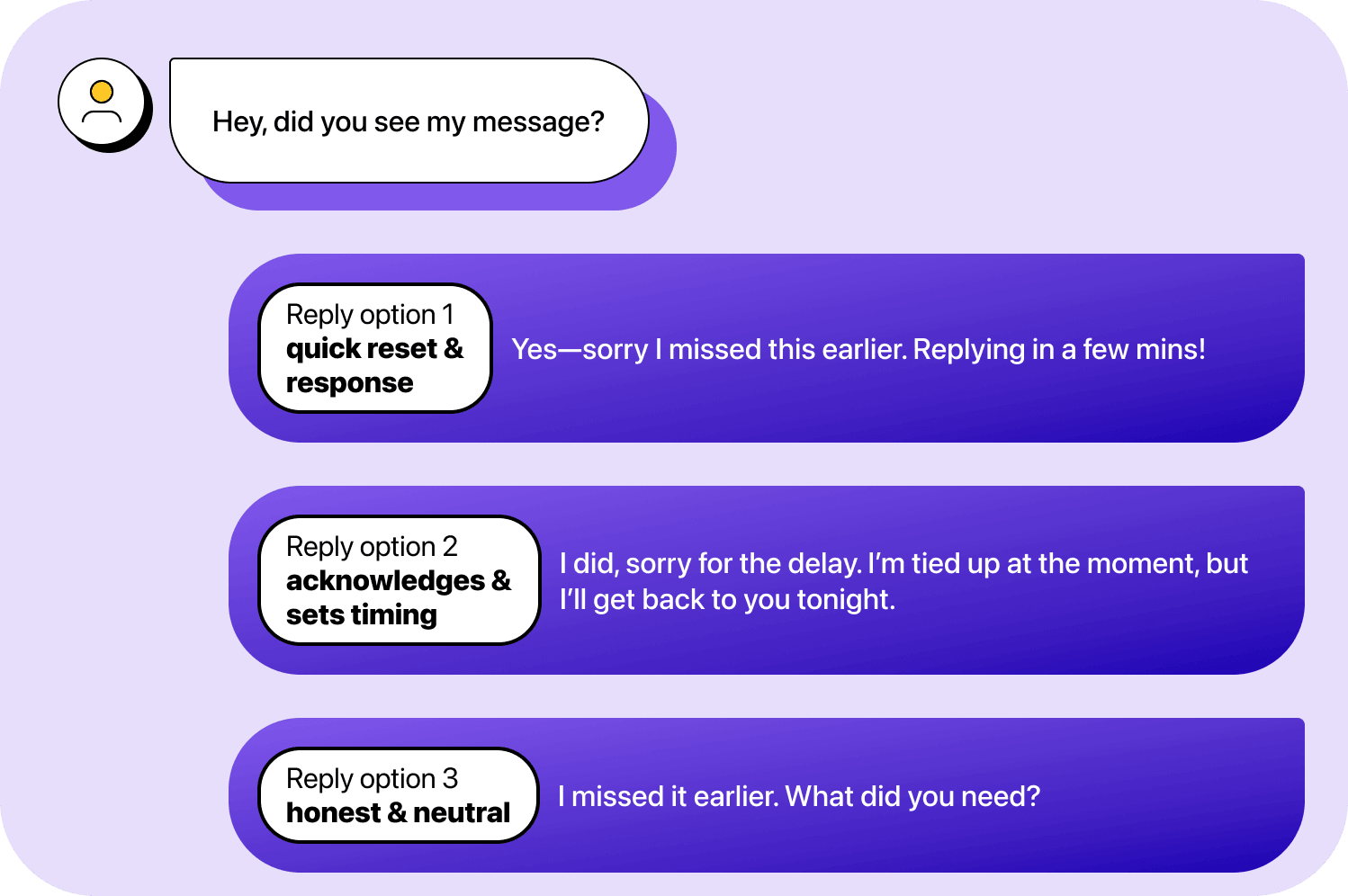
Responding after a long delay
When you reply late, you’re responding to the original message and the gap at the same time. A brief acknowledgment plus a clear reset usually works best. Keep it moving and avoid turning the delay into a bigger conversation than it needs to be.
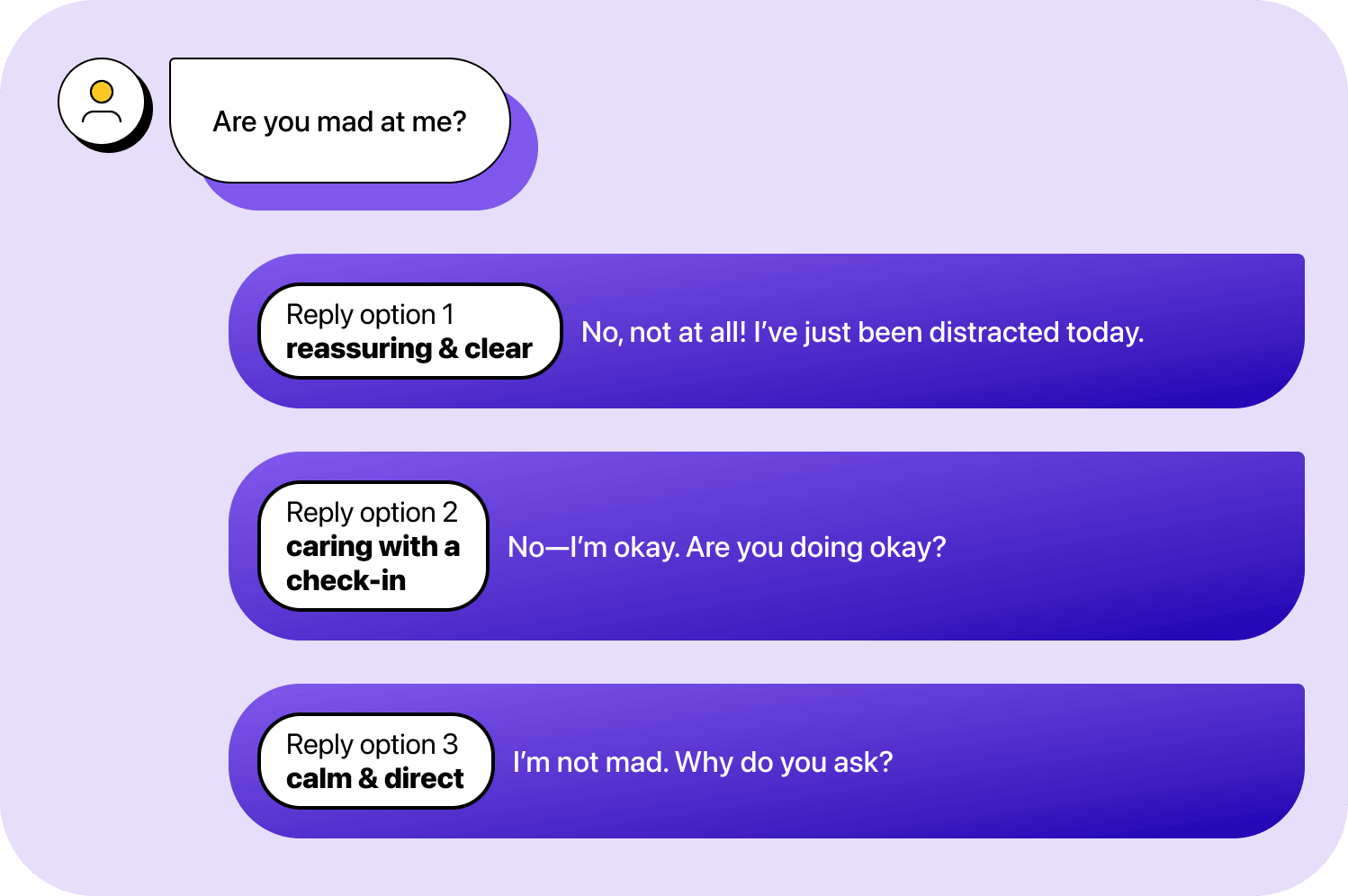
Awkward texts and misunderstandings
Awkward messages often come from uncertainty, like someone is trying to read between the lines. Your job is to reduce ambiguity with a calm, straightforward reply. If something feels off, a gentle question can clear it up quickly.
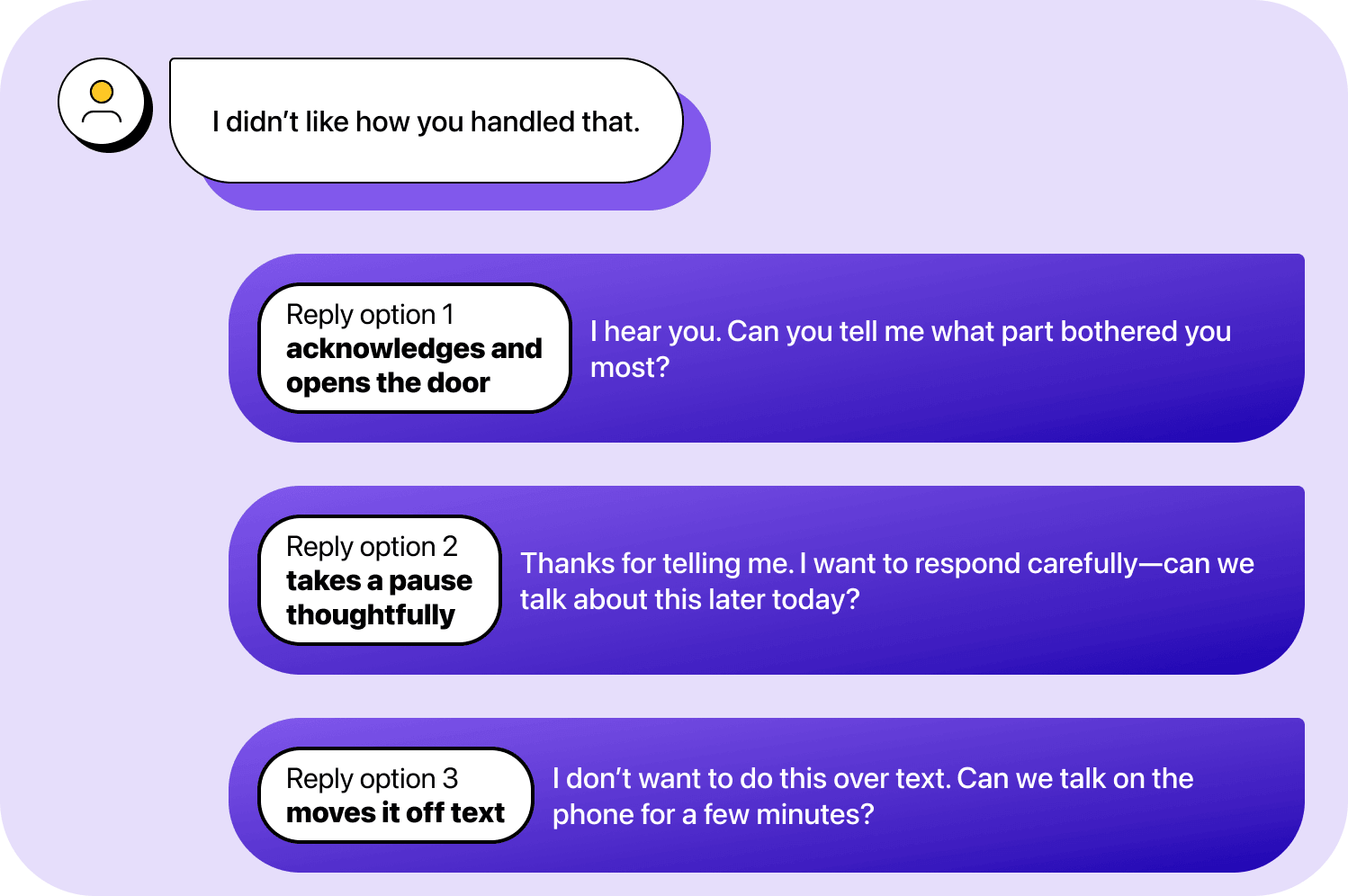
Serious conversations and conflict
Texting isn’t built for nuance, so tense topics can escalate fast. Aim for a reply that acknowledges the concern and creates a path forward. If you feel the conversation getting heated, it’s often better to pause or move it off text.
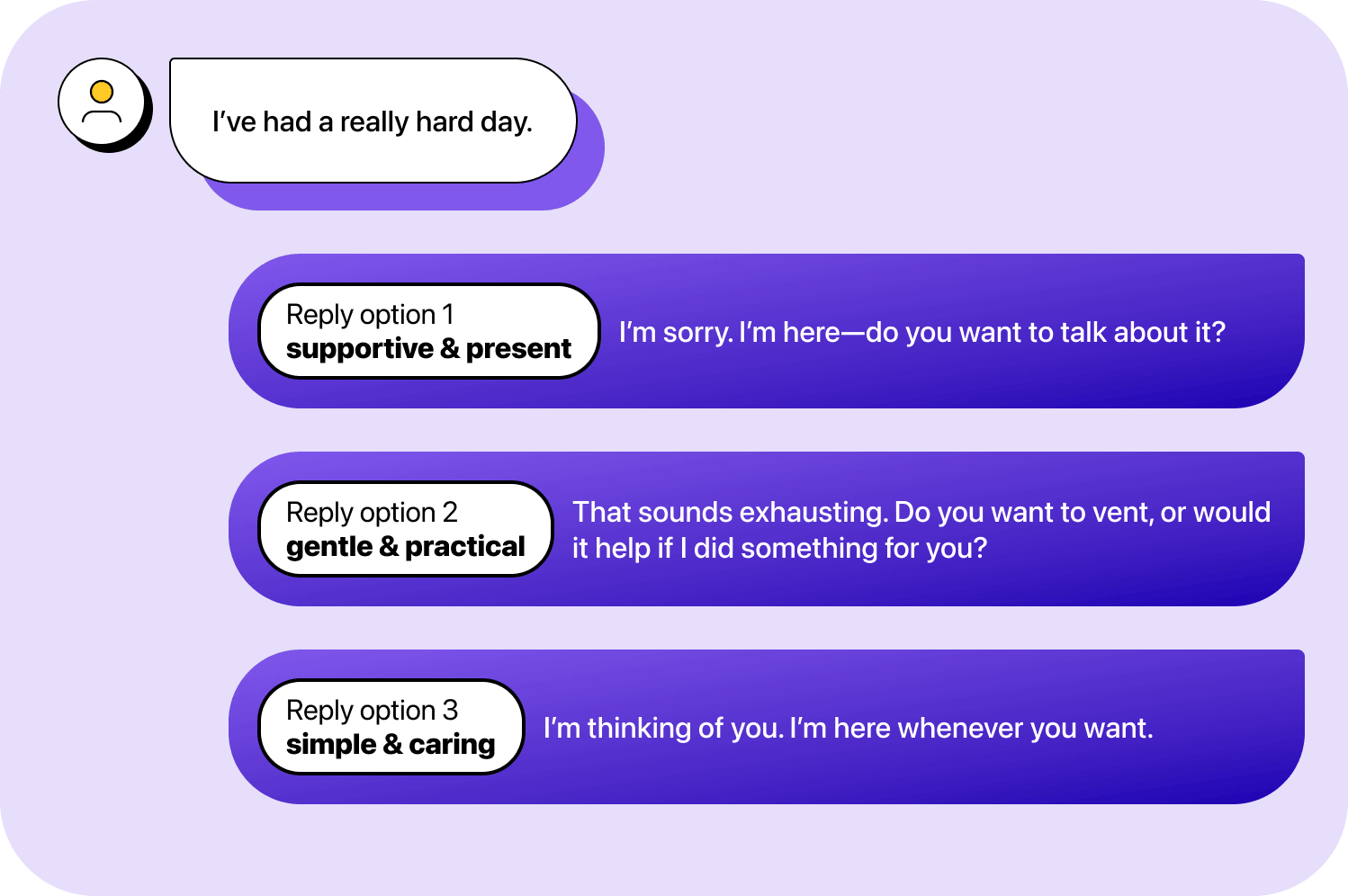
Emotional or supportive messages
When someone shares a hard moment, they usually want to feel understood before they want solutions. Keep your reply simple and present, and offer a kind next step—listening, checking in, or practical help—without taking over the conversation.
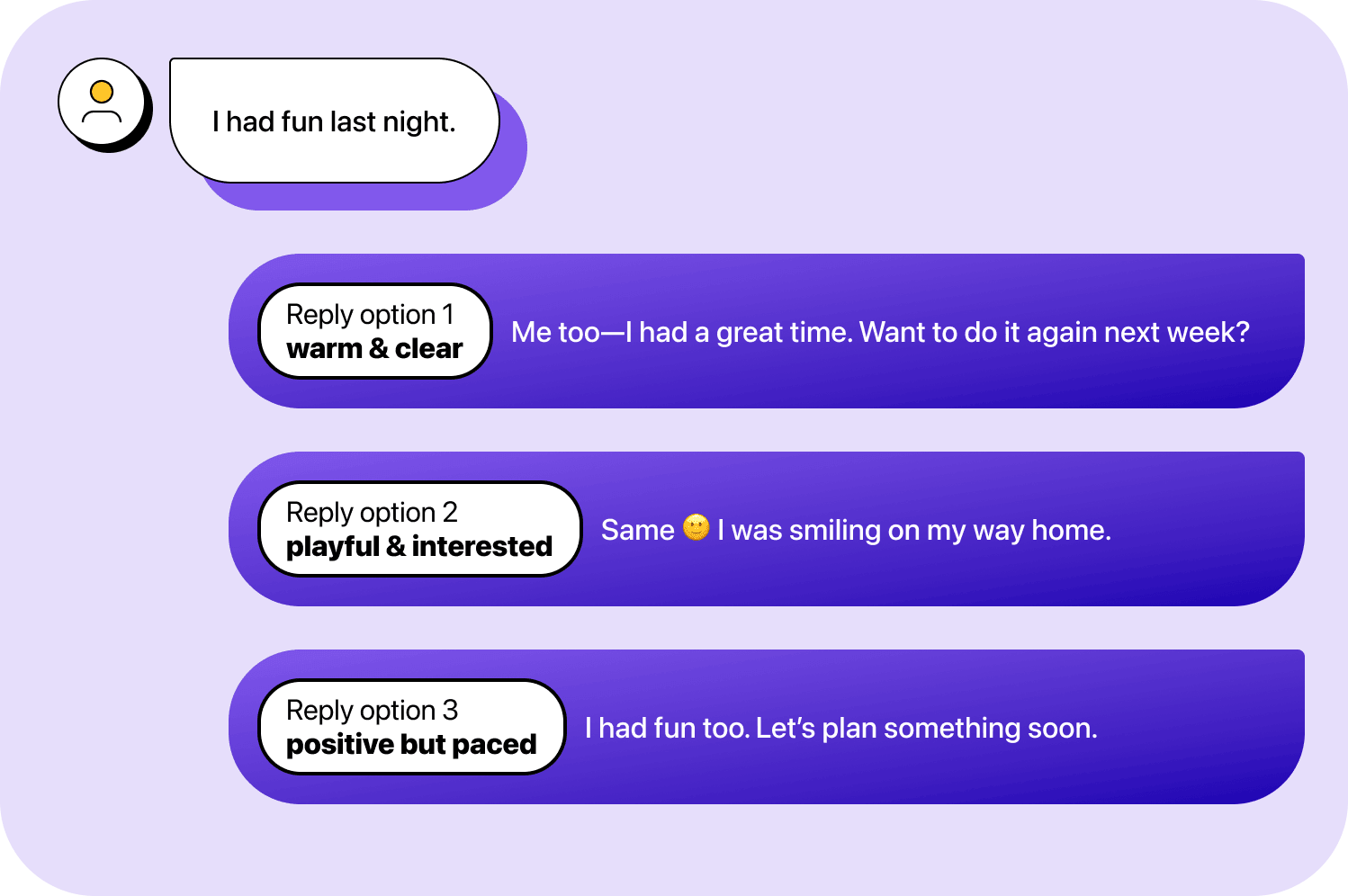
New connections and early dating texts
Early conversations are a balance of warmth and pacing. A good reply shows interest without forcing intensity, and it keeps the momentum going in a way that feels natural. If you want to make plans, a clear suggestion is often better than vague enthusiasm.
How to respond to a professional text
Professional texts are usually tied to a next step: confirming a plan, getting an update, resolving an issue, or keeping a project moving. The tone can still be friendly, but clarity matters more here because people are making decisions based on your message. A strong reply answers the ask early, includes timing when it matters, and makes next steps obvious.
Below are common professional scenarios with an example incoming text and two reply options you can adapt based on your role, relationship, and urgency.
Responding to customers or clients
Customers typically want one of three things: confirmation, an update, or a fix. Your job is to reduce uncertainty quickly and set expectations clearly, especially when there’s a delay or problem.
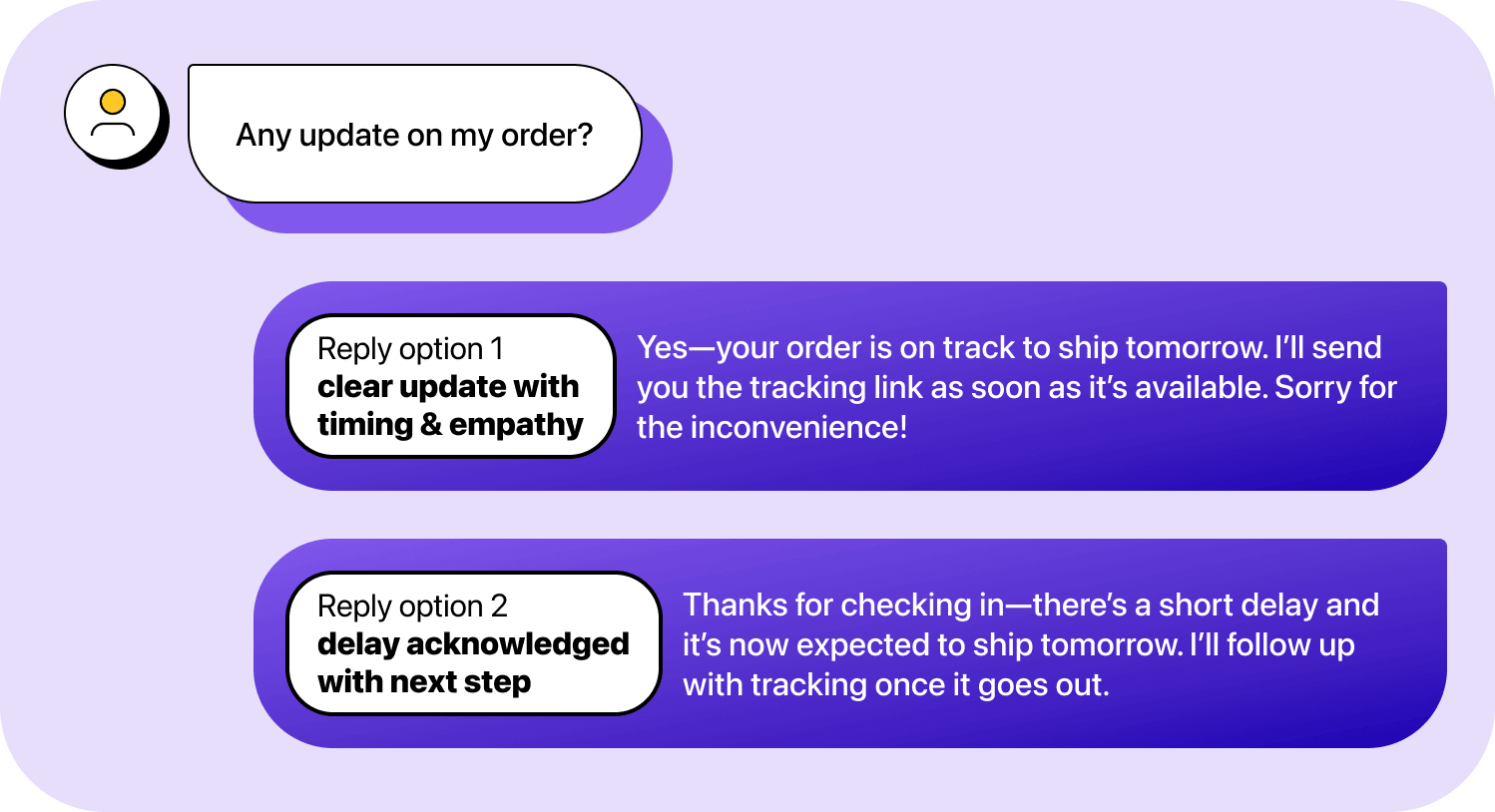
Responding to coworkers
Coworker texts usually happen in the middle of work, so the best replies are direct and easy to act on. Lead with status or the decision, then add timing so others can plan around you.
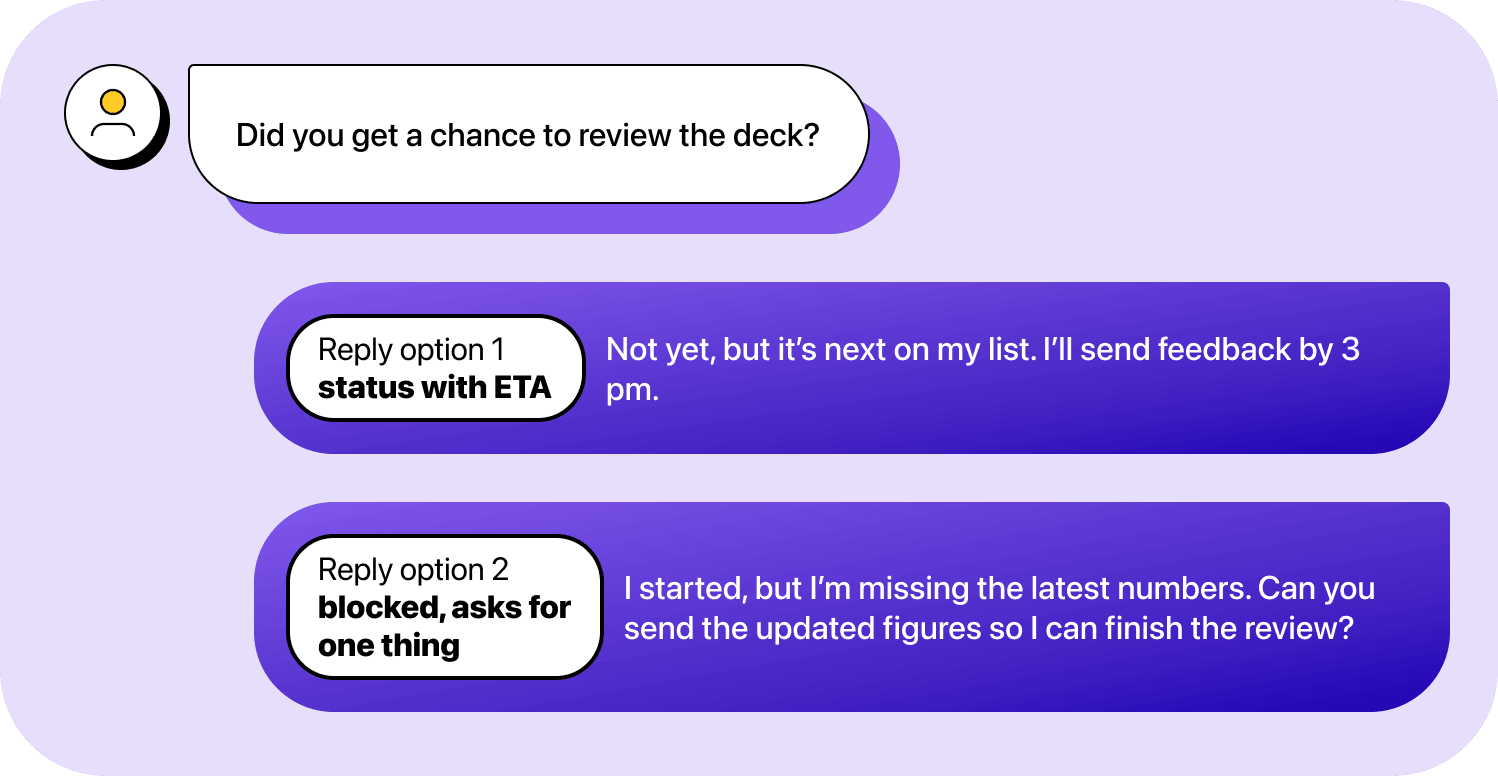
Responding to managers or leadership
When you’re texting upward, focus on what’s true right now and what you need. If there’s a risk or delay, share it early and include an option or recommendation so the next step is clear.
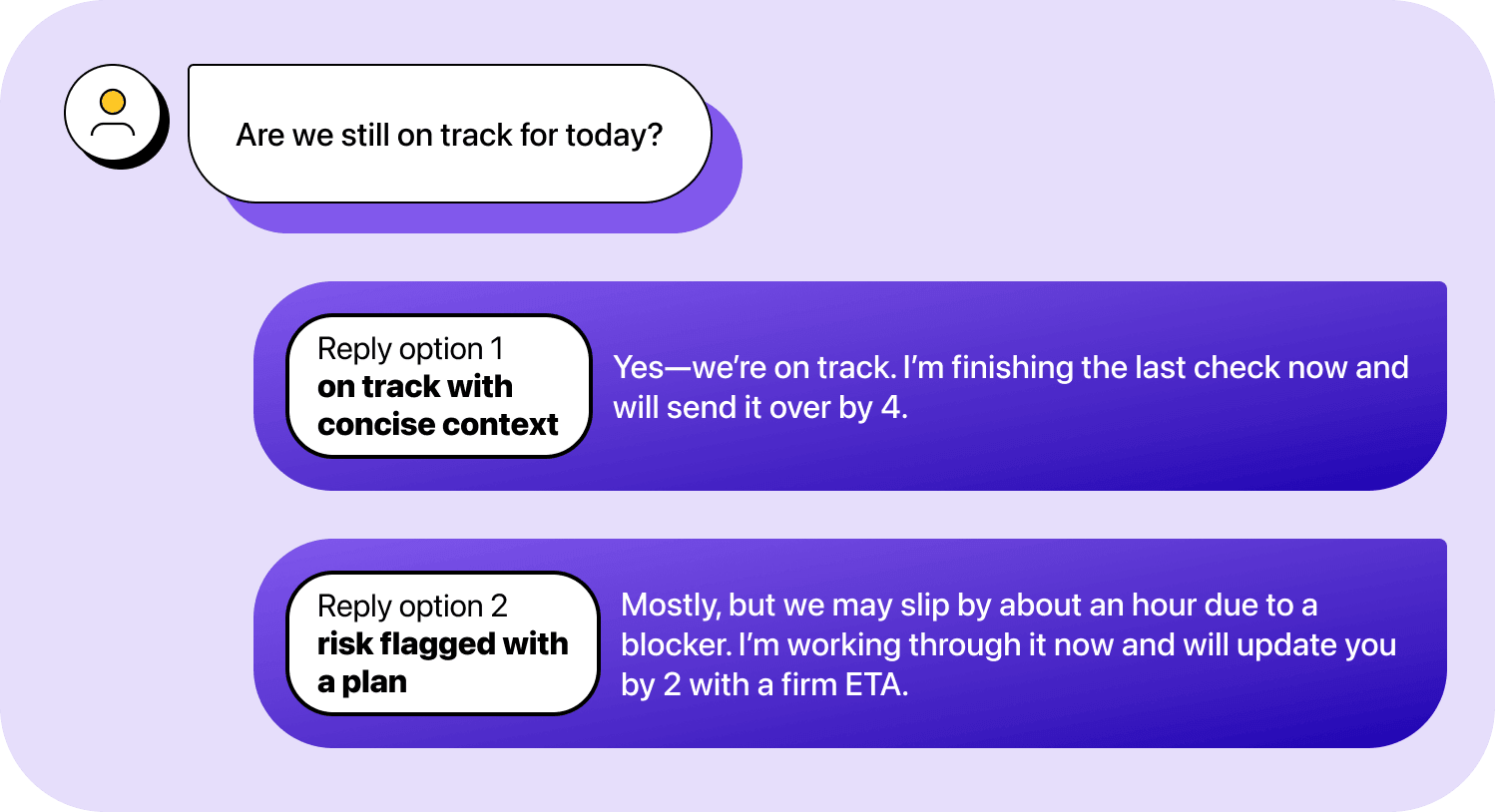
Responding in recruiting or hiring
Recruiting texts shape the candidate experience. Clear scheduling, quick follow-up, and respectful closure make the process feel organized and human.
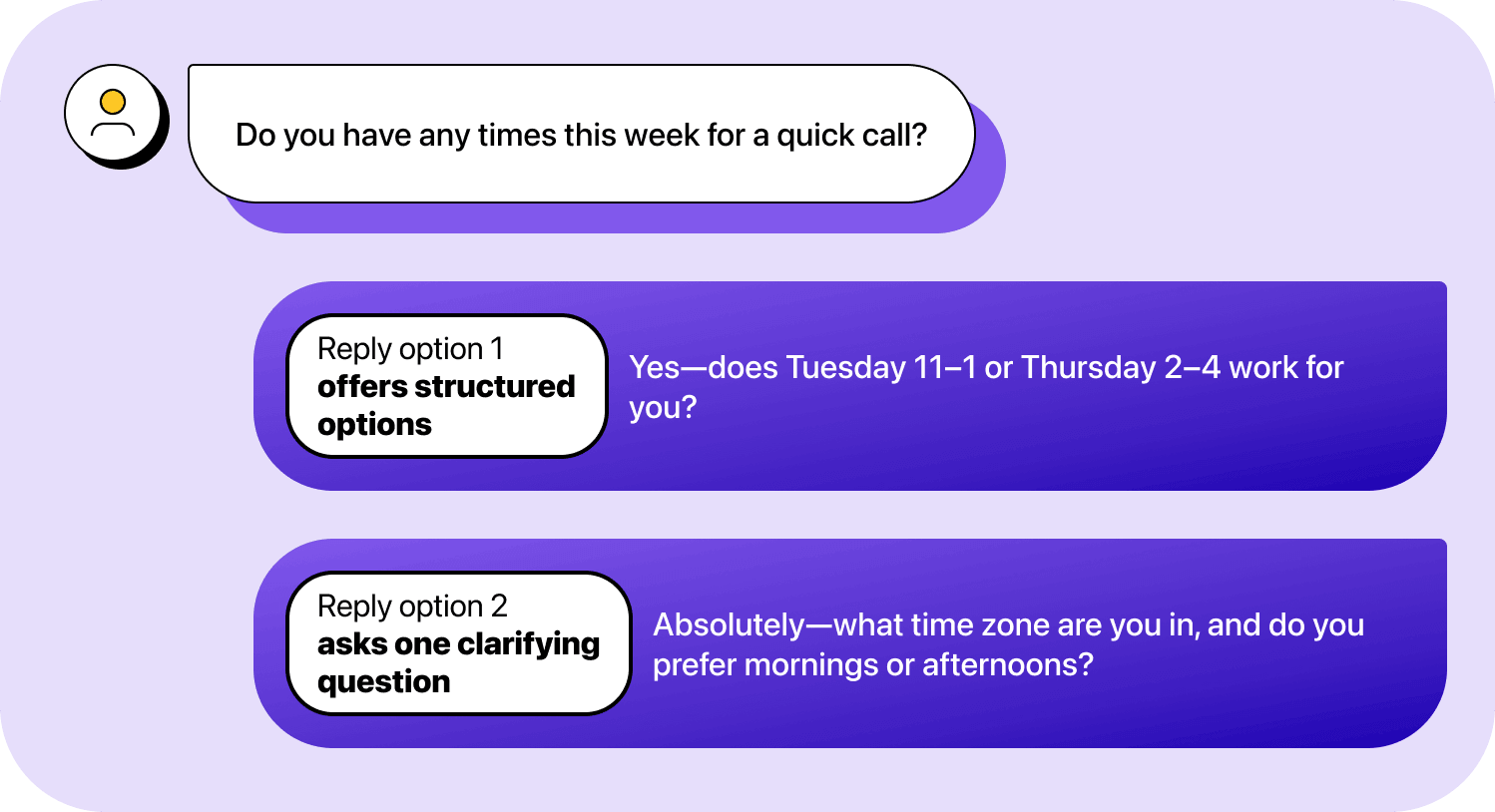
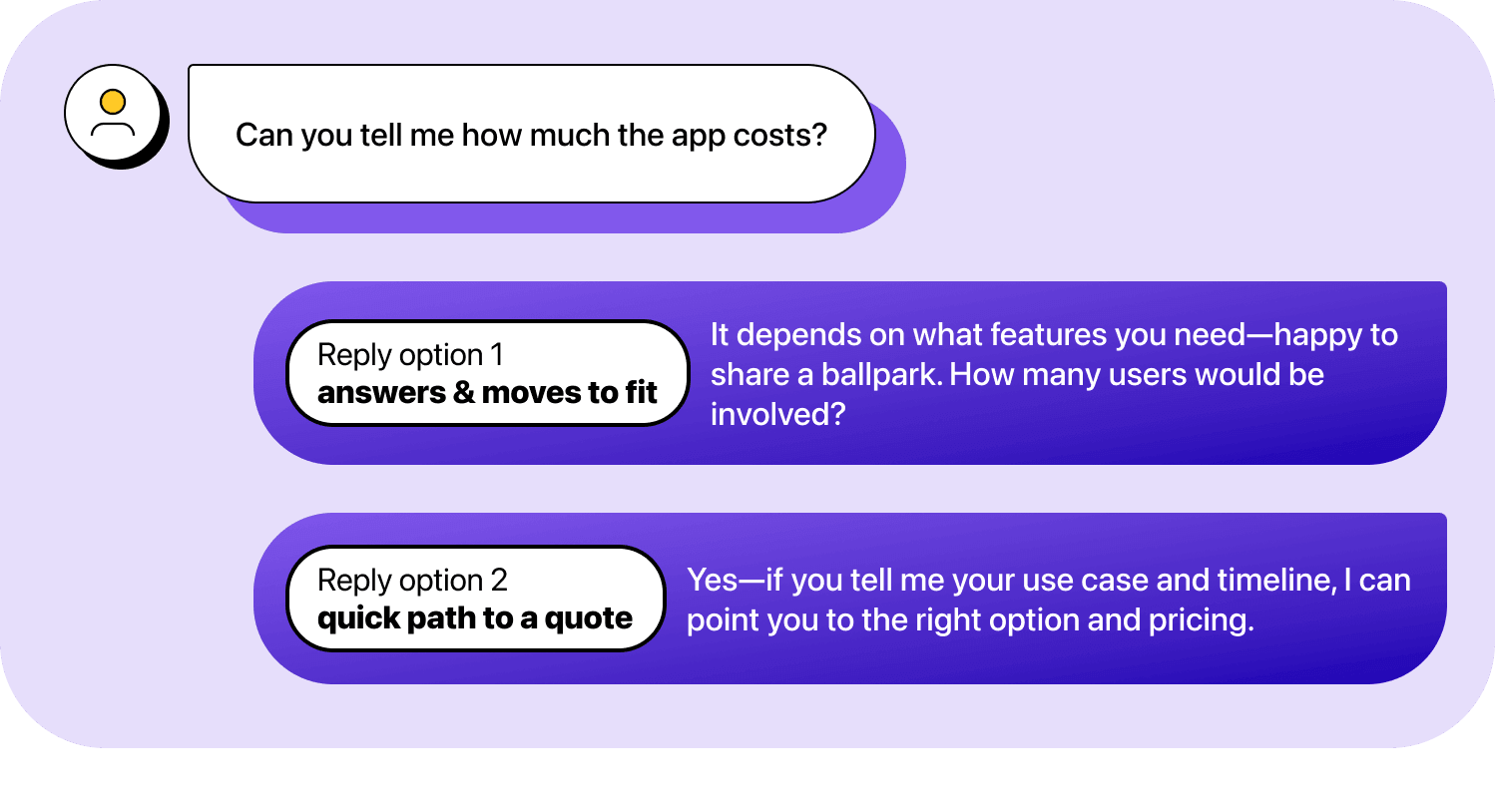
Responding to leads or prospects
Sales and intake texts work best when you keep momentum without pushing. Confirm what you understand, ask one question that moves things forward, and offer a clear next step.
A quick checklist before you hit send
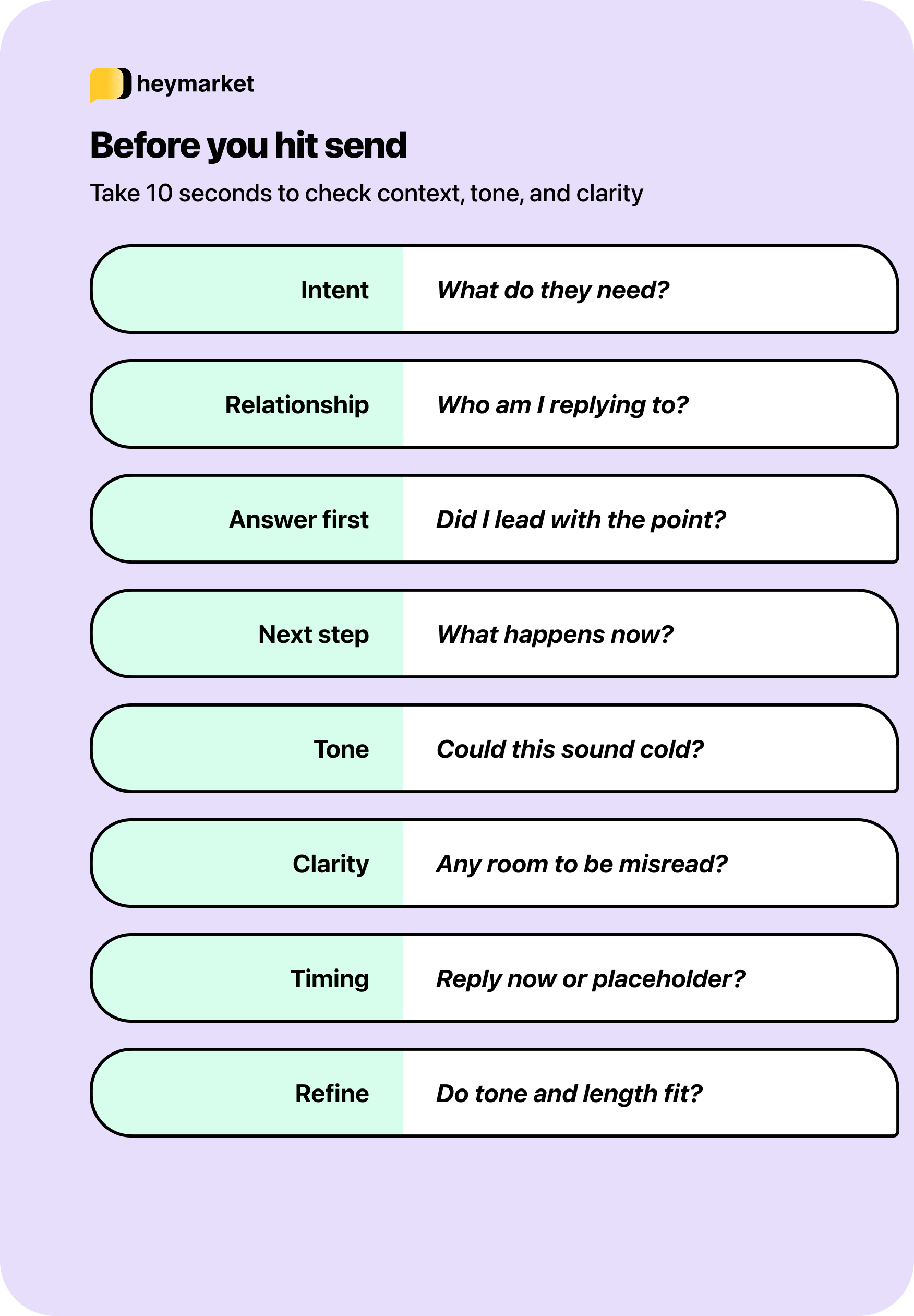
Once you’ve got the basics down—intent, relationship, a clear first line, and the right tone—the hardest part is usually just getting out of your own way and avoiding overthinking it.
This checklist is meant to be the “last 10 seconds” scan: it helps you apply our tips quickly, especially when you’re replying fast, multitasking, or worried your message might be misread.
Ask yourself these questions as you re-read your text:
- Intent: What does this person need right now—an answer, a plan, reassurance, support, or a simple connection?
- Relationship: Does your tone match the person and the moment, not just the fact that it’s a text?
- Answer first: Did you respond to the actual ask in the first line, or did you avoid it and overcomplicate the message?
- Next step: Is it clear what happens now and when (even if the next step is “I’ll reply later”)?
- Tone line: If your message is brief or firm, would one short line prevent it from sounding cold?
- Clarity: Could a reasonable person misread this? If yes, add one clarifying sentence or ask one question.
- Timing: If you can’t respond fully, should you send a placeholder reply that acknowledges the message and sets expectations?
If you’re still not fully confident in how your message will come across, an AI response generator can help you fine-tune it. With a few clicks, you can make your message more formal or more casual, tighten or expand the wording, or smooth out phrasing—all while keeping your original intent intact.
Draft strong replies that move conversations forward
A strong text reply helps the conversation go somewhere productive. Sometimes that means answering a question or confirming a plan. Other times, it means acknowledging something important, setting a boundary, or responding in a way that lowers tension and keeps things from getting stuck.
This guide is designed to help you do that consistently. By paying attention to intent, relationship, and tone—and by being clear about what matters in the moment—you can reduce confusion and keep conversations on track, both personally and professionally.
If you already know what you want to say but need help fine-tuning how it comes across, Heymarket’s AI texting tools can help you adjust tone, length, and phrasing for clearer, more consistent business messaging.