
Omnichannel is a customer communication approach where every channel—text, email, social, chat—connects to the same customer history, so context carries over no matter where someone reaches out. An omnichannel approach helps customers stop repeating themselves, and your team responds with the full picture every time.
Customers frequently use multiple channels. A customer might message your business on Instagram and call the next day about the same order. If they have to explain the whole thing over again because nobody on the phone can see the DM, they can become frustrated.. Omnichannel prevents that scenario.
Nearly a third of consumers (29%), have stopped buying from a brand entirely because of a poor customer experience, according to PwC’s 2025 Customer Experience Survey. This guide defines omnichannel, showing how it differs from multichannel, its benefits, how AI fits in, and what it looks like across different teams.
Omnichannel key takeaways
- Omnichannel means every channel your customer uses connects to the same conversation history, so context carries over between them.
- It differs from multichannel, which means being present on several channels that don’t necessarily share data.
- Omnichannel improves customer experience by removing the need to repeat information every time someone switches channels.
- AI strengthens omnichannel by acting on the full conversation history, regardless of which channel a message came in on.
What is omnichannel?
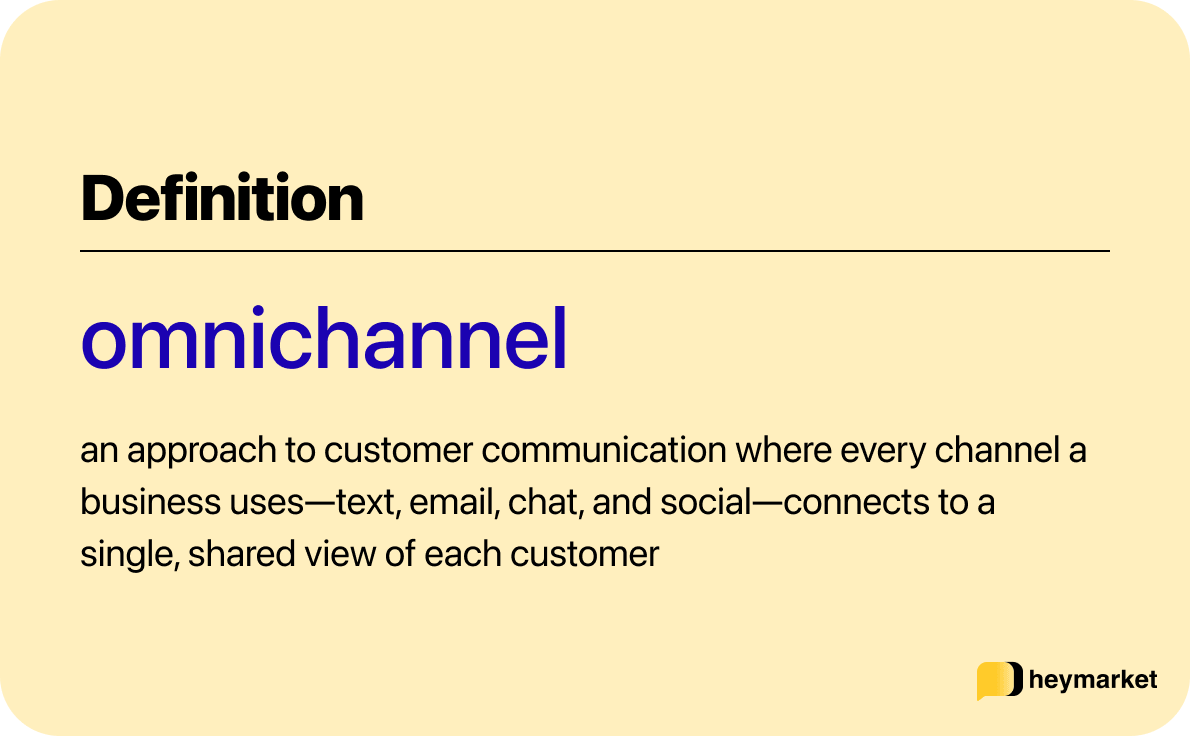
Omnichannel is an approach to customer communication where every channel a business uses—text, email, chat, and social—connects to a single, shared view of each customer. A conversation can start on one channel and continue on another without your customer having to start the conversation over.
The word itself comes from “omni,” meaning all, and it’s meant literally: every channel, one connected record. That’s a higher bar than simply offering a lot of ways to get in touch.
For your team, an omnichannel setup means whoever answers a message has the full history in front of them, not just the piece that came through their channel. A support rep can see that your customer already asked a sales question over text last week, and a sales rep can see that the same contact opened a support ticket over email this morning. Neither team member has to ask for an update or guess who is responsible for follow-up.
Omnichannel vs. multichannel vs. single-channel
The difference between omnichannel, multichannel, and single-channel comes down to connection. Your business can be present on every channel imaginable and still leave your customers repeating themselves. Here’s a table describing each one alongside the potential gaps they either do or don’t fill:
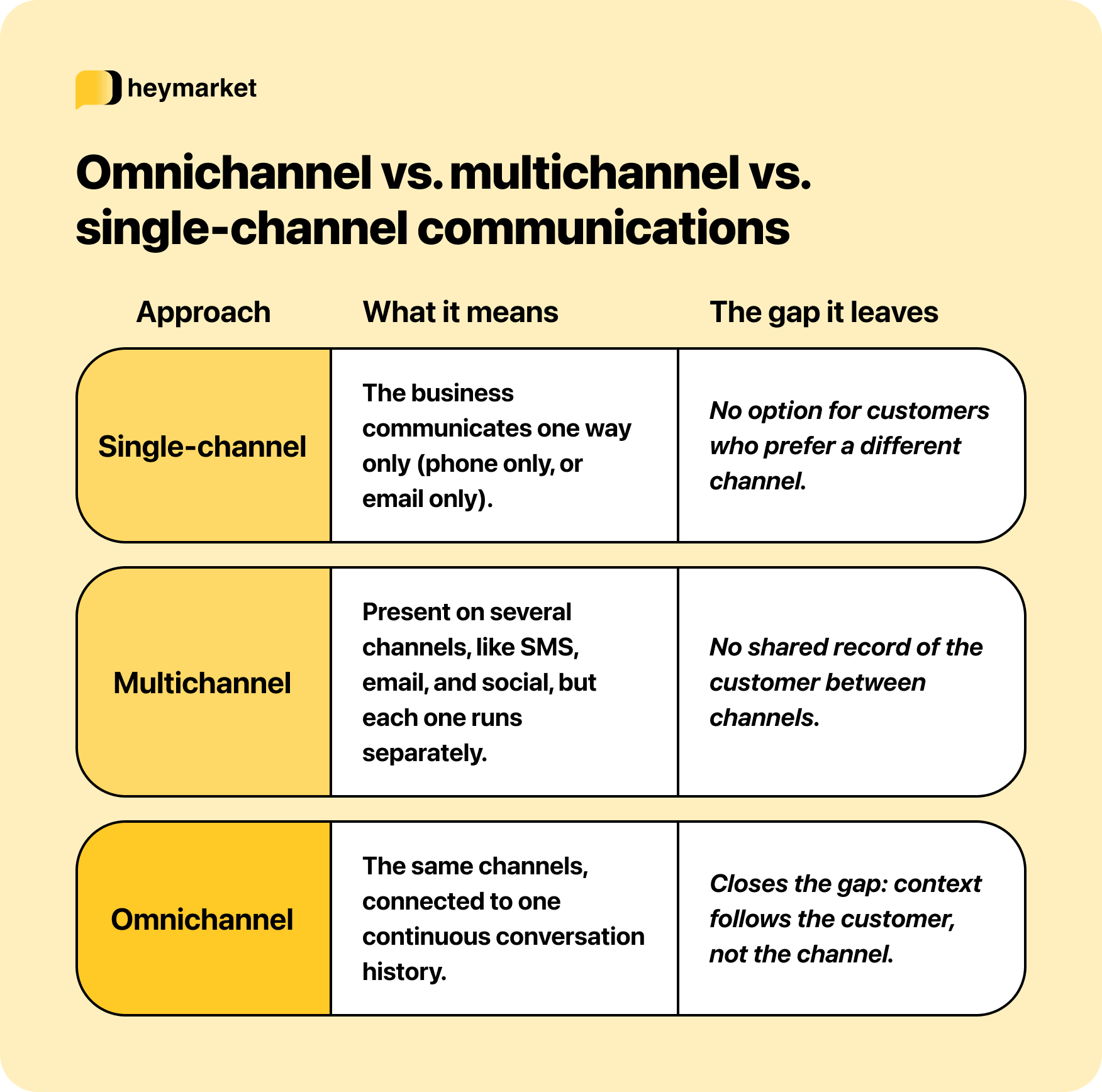
Multichannel and omnichannel can get confused because they can look identical from the outside; the same list of channels, the same logos on the contact page. The real test is whether a conversation carries over when a customer switches from one to another; if it doesn’t, you’re still multichannel, not omnichannel.
What are the benefits of omnichannel?
Omnichannel messaging delivers a more consistent customer experience, and that consistency shows up directly in the numbers that matter to your business. The core benefits of omnichannel are:
- Higher customer retention: Customers who don’t have to repeat themselves are less likely to give up mid-conversation. Given that 70% of executives say customer expectations are evolving faster than their companies can adapt, closing that gap with connected channels is a real competitive advantage.
- Better agent productivity and faster resolution: When the full history is visible, your team spends less time asking your customer to repeat details and more time resolving their issues. The first reply can address the actual problem instead of catching up on context.
- Richer customer data: A connected view across channels shows the whole relationship, not a fragmented slice of it, which makes every future interaction, and every future decision about that customer, more informed.
- Lower operating costs: Fewer repeated conversations and fewer handoffs mean less time spent solving the same issue twice, on two different channels, with two different people.
In omnichannel customer service, these benefits compound day to day, where every repeated question and missed handoff has a direct cost.
How do omnichannel and AI work together?
AI makes omnichannel work at scale by reading the full conversation history and acting on it, rather than treating each channel as its own silo. Without that shared context, AI can only respond to the piece of the conversation happening on one channel at a time, which defeats the purpose of connecting them in the first place.
- Consistent responses across channels: An AI agent can answer a question the same way whether it arrives by email, text, chat, or social message, because it’s drawing on the same history either way. Your customer doesn’t get a different answer depending on which app they decided to reach out with.
- Automations triggered by any channel: With automations, an action on one channel, a reply, a status change, a keyword, can trigger a follow-up on whichever channel makes sense next. The trigger and the response don’t have to happen on the same channel.
- Natural language conversations: Conversational AI understands human language and responds to customers in a conversational tone. This helps customers feel supported for requests that are easily solved, and your team can be available for issues that need a human touch.
Omnichannel and AI work well together to meet customers where they are 24/7, solve lower-stakes support issues, and streamline workflows so your team can work more efficiently.
Omnichannel examples by team
Omnichannel shows up differently depending on which team is using it, but the pattern is the same: context follows your customer, not the channel.
- Sales: A prospect replies to a text follow-up, then later emails a question about pricing. With the history connected, the rep picks up exactly where the conversation left off instead of asking the prospect to repeat their situation or re-explain what they’re evaluating.
- Support: Your customer starts a conversation on social media and continues it over SMS a day later. The full thread carries over, so the second agent isn’t starting from zero, and your customer doesn’t have to retell the story to someone new.
- Operations: A scheduling update sent by text triggers a confirmation email automatically, keeping both channels in sync without anyone manually copying the update across systems or checking two places for the same information.
- Marketing: Your customer clicks a promotional text link, then opens a follow-up email a few days later that picks up based on what they already did instead of repeating the same offer. That’s the core of omnichannel marketing: campaigns that respond to behavior across channels instead of running on separate, disconnected schedules.
Multiplied across a full week of conversations, the time and friction it removes adds up to a genuinely different experience, for your customer and for the team handling it.
None of these examples require your customer to know or care that “omnichannel” is happening behind the scenes. They just have an effortless customer experience with a business that seems to remember them, which is the entire point. Your customers never see the technology working. They just notice that the experience feels continuous.
How does omnichannel improve your customer experience?
Omnichannel improves your customer experience by fixing a problem your team feels internally before your customers notice it. When departments can’t see each other’s conversations, your customers can get inconsistent answers depending on who they reach.
76% of customers expect consistent interactions across departments, while 54% say it feels like sales, service, and marketing don’t share information with each other, according to Salesforce’s research. That gap between expectation and reality is exactly what connected channels close.
Getting started: Connect the channels your customers already use
Start by connecting the channels your customers already use, not adding new ones. Once those channels talk to each other, every conversation picks up where the last one left off, regardless of which app it started in.
See how Heymarket’s omnichannel solution brings every channel into one shared inbox: book a demo.
Omnichannel FAQs
Researching how omnichannel can work for your team can feel overwhelming depending on how many channels you’re currently using. Here are a few more questions that can help you understand more about it.
What’s the difference between omnichannel and multichannel?
The difference between multichannel and omnichannel is being present on multiple channels (multichannel) vs. those channels being connected to the same customer history (omnichannel).
Do small businesses need an omnichannel strategy?
Yes, if customers already reach out on more than one channel, which most do. The value comes from connecting the channels you’re already using, not from adding more of them.
What tools do you need for omnichannel?
You need a platform that keeps every channel connected to one shared record, rather than separate tools for each channel, and a shared inbox that covers the channels your customers use. Visit our omnichannel messaging guide to learn more about SMS integrations and best practices
Does omnichannel only apply to customer support?
No. Sales, support, and operations all benefit from connected channels, since every team deals with customers or contacts moving between them.